In Madagascar's far south, the Androy region faces recurring droughts and mounting climate change pressures. With a poverty rate of 91%, this situation worsens chronic food and nutritional insecurity in rural communities, making Androy one of the country's most vulnerable regions. For decades, emergency interventions have addressed immediate needs. Yet purely humanitarian responses show their limits: while they save lives short-term, they fail to break the cycle of vulnerability. Present since the early 2000s, Gret has progressively strengthened its action by linking emergency and development. Since 2018, this integrated approach has rolled out through phases of the Food Assistance programme, supported by France's Ministry of Europe and Foreign Affairs.
Strengthening Local Agricultural Systems
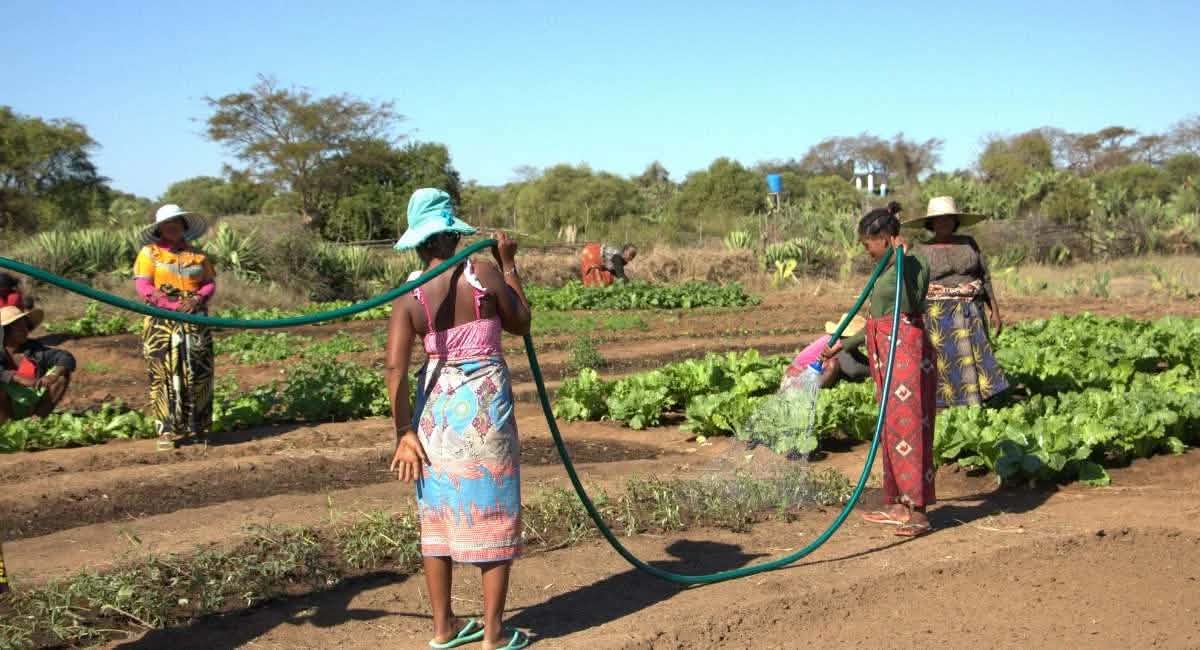
In these rural zones, the lean season remains critical: stocks deplete and resources dwindle. Targeted distributions of cereals and legumes cover 30% of household food needs. Simultaneously, Gret strengthens local agricultural systems. During rainy seasons, adapted seeds from CTAS are distributed. In water-rich areas, women receive support in market gardening or lowland rice cultivation. These practices improve family nutrition and generate supplementary income. In Afomarolahy, farmer Sija Fihamina testifies: "Before, we sometimes went hungry. Today, we eat what we produce and I can sell the surplus. This lets me pay my children's school fees and buy medicines when needed."
Through these initiatives, the local rural economy gradually consolidates.
Strengthening Communities' Economic Capacity
Rural development also requires access to adapted financial mechanisms. In intervention communes, Village Savings and Loan Associations (AVEC) structure community savings. Members save collectively and access credit for their activities. "Thanks to our savings group, we can take loans to develop our market gardening, then sell our products. This lets us meet our needs and reinvest part of our earnings," explains Sahondra Claire, resident of Andaivozaky, Antanimora.
Beyond financial support, these associations strengthen solidarity and communities' capacity to face challenges.
An Integrated Approach Serving Rural Territories
In Androy, rural development cannot be conceived without close coordination between immediate responses and long-term investments. "This approach addresses emergencies while progressively strengthening household autonomy," emphasizes Talilisoa Monja, Gret's operations manager in the region. Actions integrate nutrition, education, and gender equality. Pilot school gardens raise children's awareness of good dietary practices, while "relay men" promote gender equality and improve household nutritional practices.
With 750,000 euros in funding, the food assistance project is supported by France's Ministry of Europe and Foreign Affairs (MEAE), through the French Embassy's Cooperation and Cultural Action Service (SCAC) in Madagascar.
Key Figures
Over 7,000 people sensitized to good nutritional practices. Over 1,700 households receiving cereal and legume distributions during lean season. Over 4,000 people supported in strengthening resilience and food autonomy. Over 7 tonnes of food seeds distributed. Nineteen Village Savings and Loan Associations created in four communes.
Food Assistance
In five Androy communes (Ambovombe, Ambonaivo, Ambinany, Antanimora, and Jafaro), food insecurity reaches alarming levels. In 2025, nearly 40% of Ambovombe's population faces food crisis (IPC 3), with 27% of children under five suffering acute global malnutrition. Gender inequalities, early marriage, and women's weak economic autonomy heighten this vulnerability. The Food Assistance 8 project, implemented by Gret under phase 8 of the French Initiative for Food Security and Nutrition (IFSAN), combines prevention, assistance, education, and resilience in a gender- and climate-sensitive approach, working across three pillars for nutrition during the 1,000 critical days.
Domestic
Drought in Androy: From Humanitarian Crisis to Lasting Resilience
Source: Midi Madagasikara