Politics
France-Madagascar Cooperation: Bruno Fuchs Meets Michaël Randrianirina
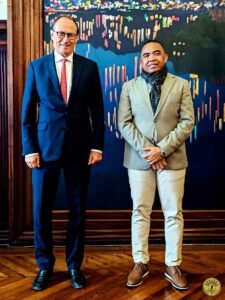
The French deputy, Paris's envoy on Madagascar affairs, met with Michaël Randrianirina at Ambohitsorohitra. France seeks to preserve its position in Madagascar. But the diplomatic landscape has shifted. With a Malagasy government intent on negotiating with everyone, Paris must now contend with Moscow. Since Andry Rajoelina's departure, the Malagasy authorities have diversified partnerships and opened doors wider to Russia, now present in the country's strategic choices. A decision openly acknowledged by the new leaders. The visit on Wednesday, August 19, of a French National Assembly delegation led by Bruno Fuchs, chairman of the foreign affairs committee, takes on particular significance. Behind the rhetoric of "historical cooperation" lies a battle for influence. Received by Head of State Michaël Randrianirina, Bruno Fuchs placed bilateral cooperation at the heart of discussions. The Malagasy presidency emphasizes both countries' commitment to strengthening what it calls a historical relationship. Standard diplomatic language. But on the ground, the balance is shifting. The French delegation also met the same day with the Minister of Armed Forces, Ely Razafitombo, at Ampahibe. A far from trivial meeting, as military and security cooperation represents one of France's main levers of presence in Madagascar. Yet since early this year, Antananarivo has accelerated partnership diversification, notably with Moscow. Russia's rising influence now constitutes one of the main changes in Madagascar's diplomatic landscape. Military cooperation, equipment, political relations, and economic rapprochement: Moscow seeks to consolidate its influence, while the Malagasy government clearly wants to avoid dependence on a single partner. Monopolies The message came directly from National Assembly President Siteny Randrianasoloniaiko during his meeting with the French delegation on Tuesday, August 18, at Tsimbazaza. Reputed close to Russia, the lower house president defended an all-encompassing openness policy. Madagascar, he stated, is "open to all relations," works with "all countries," and does not reject France. A way of reminding that openness to Moscow does not officially mean closing the French door. But the message carries another dimension. According to information released by the National Assembly following the Tsimbazaza meeting, the assembly president indicated to the French delegation that Madagascar wants to end "monopolies" in all sectors so all partners can contribute to the country's development, as French investments hold significant importance in the country's economy. Siteny Randrianasoloniaiko went further, calling on France to strengthen its presence in business and investments linked to mining resources. An invitation revealing one of the new battlegrounds in this international competition. France remains welcome. But it is no longer alone. And above all, it no longer enjoys quasi-exclusivity in certain strategic sectors. The new Malagasy government claims a more open, diversified diplomacy less aligned with a traditional partner. Russia is capitalizing on this to advance its interests. France, meanwhile, attempts to preserve its historical positions. The confrontation is not yet direct. Malagasy leaders take care to maintain a balanced discourse. But behind diplomatic formulas, real competition exists in security, defense, mining, investments, and political influence. Sectors where Paris and Moscow now seek to strengthen their presence. Bruno Fuchs's visit comes at a pivotal moment. France comes to remind that it intends to remain a major Madagascar partner. Russia has already begun occupying more space.
Source: Midi Madagasikara