Domestic
Madagascar: SADC Puts Dialogue at Heart of Crisis Resolution
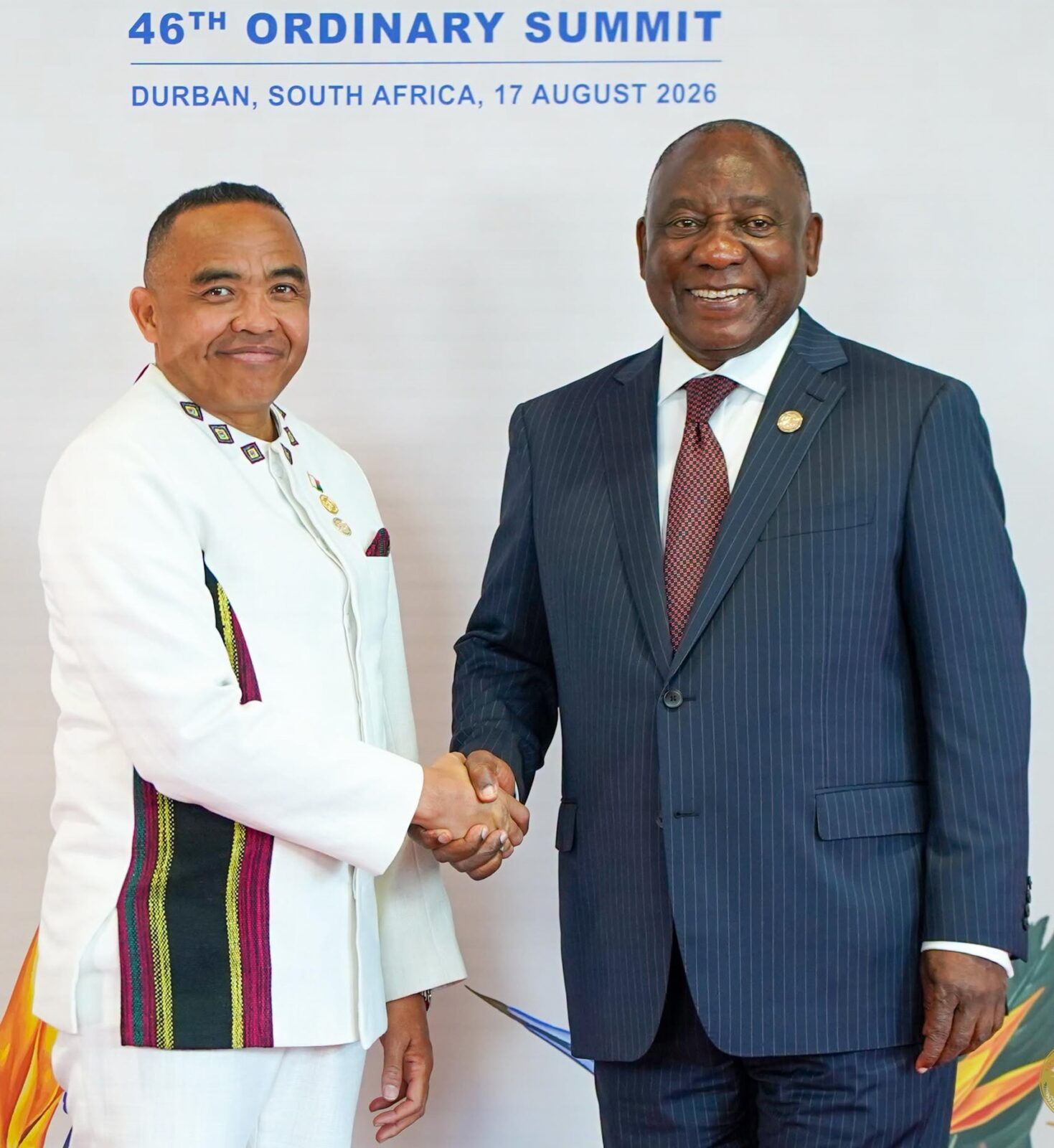
The Randrianirina couple in Durban with South African President Cyril Ramaphosa on the sidelines of the 46th SADC summit. Is SADC shifting its stance on Madagascar? It is neither abandoning its involvement nor its demands. Following the summit of heads of state and government of the regional organization held on August 17 in Durban, South Africa, Southern African leaders called on Malagasy stakeholders to preserve the current calm and prioritize dialogue to resolve their differences. A formulation that contrasts with the requirement, stated in late June, for inclusive political dialogue. In its conclusions, the summit praised the "constructive engagement" undertaken in Madagascar thanks to the efforts of the SADC panel of elders, with support from the mediation reference group, the organization's secretariat and other regional mechanisms. SADC above all reaffirms its support for Madagascar's reform process and development agenda. It cites several priorities, notably "inclusive governance, strengthening of democratic institutions, accountability of leaders, respect for human rights, citizen participation and return to constitutional normalcy." But the most immediate political message comes down to a few words: preserve calm and engage in dialogue. The summit thus urged the various Malagasy stakeholders to maintain the relatively peaceful climate currently prevailing and to choose the path of dialogue to address grievances and resolve disagreements. Semantics This declaration marks a notable evolution in SADC's diplomatic language. At its extraordinary virtual meeting on June 29, the regional organization had explicitly called for inclusive political dialogue among the protagonists of the Malagasy crisis. This time, this expression no longer appears in the Durban summit's recommendations. SADC places greater emphasis on the process, dialogue and return to constitutional normalcy. A semantic shift that is not insignificant. It leaves more room for Malagasy stakeholders to conduct discussions, while maintaining regional pressure on democratic and institutional principles. The message nevertheless remains firm on stability. Eswatini Takes Command of Regional Organization's Political Troika This represents a change at the head of the SADC body responsible for politics, defense and security. King Mswati III of Eswatini has officially assumed the presidency of the Troika of the Body on politics, defense and security. This African king already met Andry Rajoelina in February 2026. For his new mandate, the Eswatini government has already identified its main priorities, namely the conflict in eastern Democratic Republic of Congo, as well as the restoration of political order in Madagascar. Madagascar thus clearly features on the new Troika presidency's agenda. The Ball is Now in Madagascar's Court SADC is neither abandoning its involvement nor its demands. It continues to closely monitor the process underway in Madagascar, but now seems to favor an approach based on dialogue rather than imposing a specific political format. The shift from the formula "inclusive political dialogue" to "path of dialogue" could thus open new room for maneuver for Malagasy stakeholders. But regional vigilance remains intact. With Eswatini at the head of the political and security Troika, Madagascar remains on SADC's radar.
Source: Midi Madagasikara