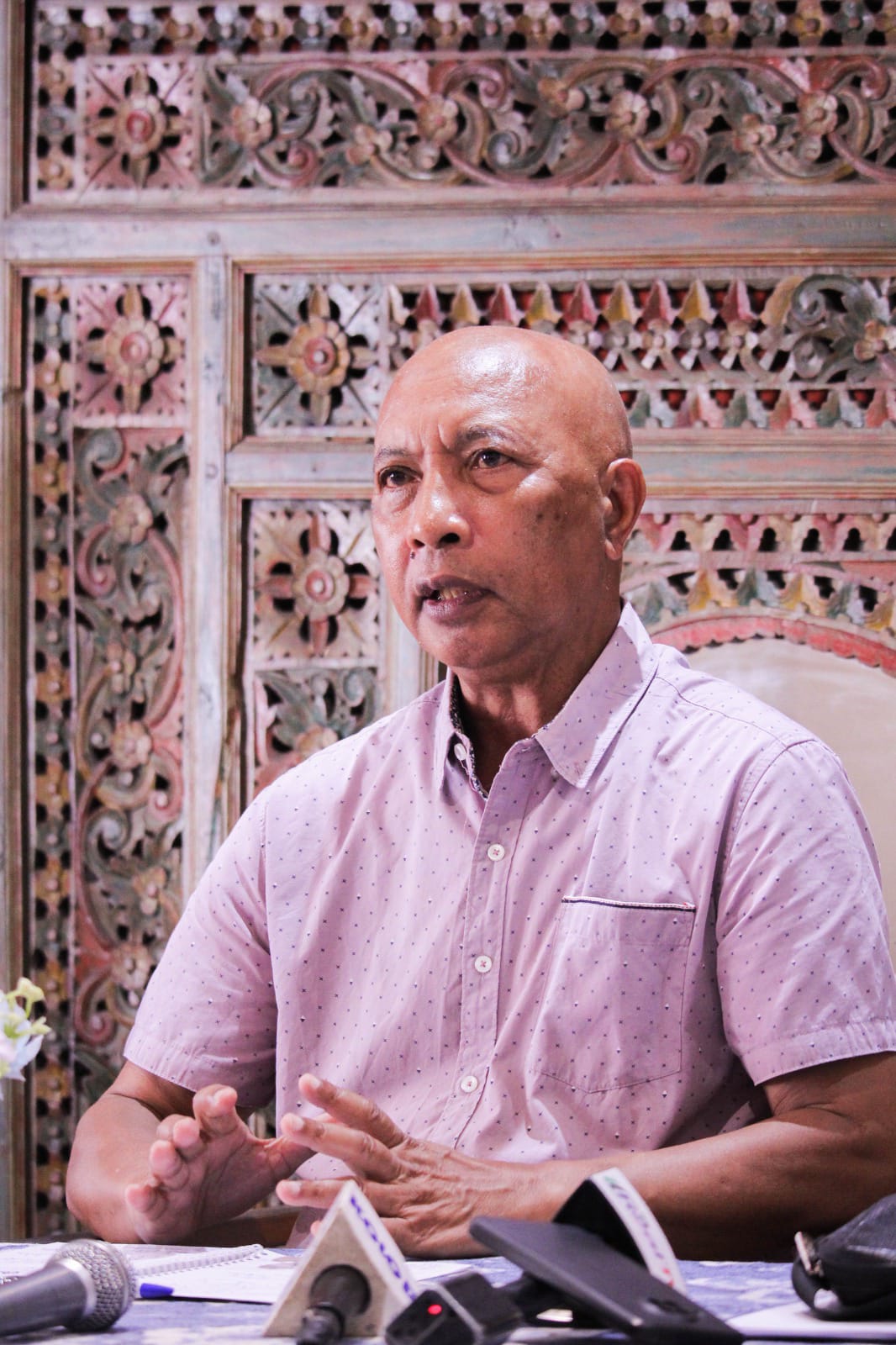
Taxation that weakens small and medium-sized enterprises and industries (SMEs) ultimately weakens economic activity, employment, and populations. Economist Hugues Rajaonson, accustomed to analyzing issues affecting the country's economy, believes that in a country like Madagascar, where wealth creation largely depends on a still-fragile entrepreneurial fabric, fiscal policy cannot be viewed merely as a budgetary revenue question. "It also constitutes a decisive lever for economic development," the economist argues, explaining that the State's role is primarily to create conditions allowing those who produce, invest, innovate, and undertake to do so in a stable and predictable environment.
Paradoxical Effect
For him, the key is not to tax businesses more heavily, but to build a fiscal system that allows both the State to have necessary resources for its missions and businesses to retain sufficient capacity to invest, innovate, and grow. This is Hugues Rajaonson's way of arguing that excessive fiscal pressure can produce a paradoxical effect. "By seeking to increase revenues in the short term, the State may contribute to reducing, in the medium and long term, businesses' capacity to invest. For an SME, each additional levy can represent a reduction in available cash to buy machinery, modernize a workshop, hire an employee, train staff, or develop a new market." The effect is particularly acute for small businesses, which typically have limited financial margins and more difficult access to credit. Hugues Rajaonson thus joins analysts who argue that when a business is weakened by excessive fiscal pressure, it invests less, produces less, innovates less, and hires less. This phenomenon causes job creation to slow, leading to decreased household income, with negative impacts on consumption.
Vicious Cycle
Thus, at the country level, weakening the private sector through overtaxation can fuel a vicious cycle: less investment, fewer jobs, lower incomes, reduced consumption, and ultimately less economic dynamism. The consequences are both economic and social. Indeed, rising unemployment, increased poverty, and multiplying forms of economic and social insecurity can partly result from lasting weakening of the productive fabric. To avoid these harmful effects, Hugues Rajaonson suggests that "fiscal policy must be conceived in a much broader perspective than merely mobilizing public revenues."
Hugues Rajaonson also believes that agricultural development is another major issue for economic recovery. Unfortunately, in the current context, agriculture does not yet benefit from the support it deserves. In Madagascar, many farmers still work in isolation, with limited means, insufficient access to financing, equipment, technology, and markets. This means their activities barely allow them to generate sufficient profits to invest and scale up. The farmer remains trapped in subsistence logic: he produces to live, but does not always have the necessary means to durably transform his production into a genuine value-creating economic activity.
Stable Public Policy
This evolution cannot, however, be left solely to farmers' initiative. "It requires stable public policy and a genuinely incentive environment." Support must cover access to financing, mechanization, training, infrastructure, technology, collective organization, and market access. The objective should be to gradually enable the agricultural sector to shift from subsistence logic to business and industry logic, while acknowledging the sector's social and economic realities. "Better organized, better equipped farmers integrated into value chains can produce more, create jobs, and generate higher incomes in their territories."