Domestic
FAD-17: $500,000 for leverage of hundreds of millions
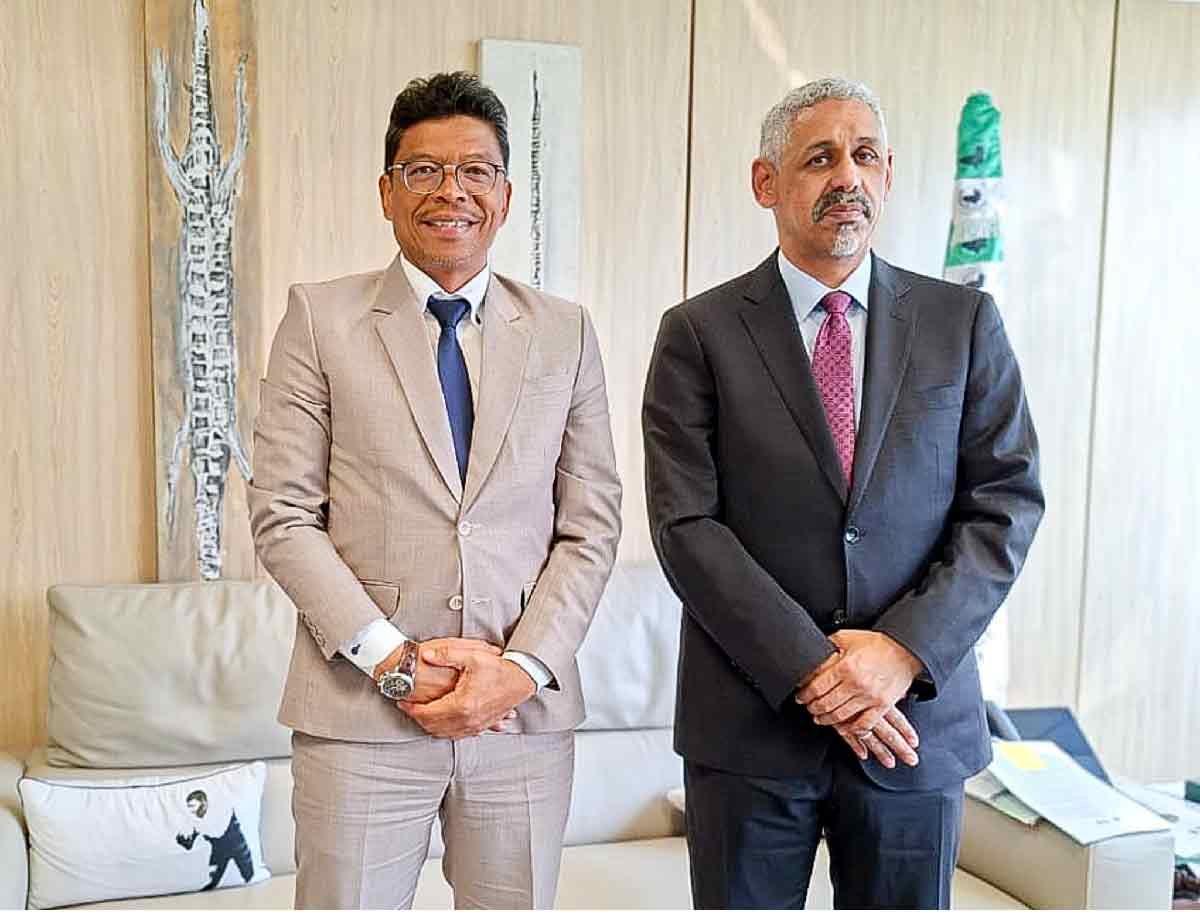
Madagascar contributes to the FAD, from which it also benefits to finance its development projects. Far from being a simple expense, Madagascar's $500,000 contribution to FAD-17 is part of a financing mechanism from which the country itself benefits, to the tune of several hundred million dollars. $500,000 paid in, but several hundred million mobilized in return to finance the country's development. This is the angle from which Madagascar's contribution to the 17th replenishment of the African Development Fund (FAD-17) should be appreciated. Certainly, the mechanism does not simply consist of transferring Malagasy money to other low-income countries. Madagascar participates in a common fund to which it itself has extensive recourse. Created in 1972 and operational since 1974, the FAD constitutes the concessional financing window of the African Development Bank Group (AfDB). It provides grants and loans on preferential terms to 37 low-income African countries, including Madagascar. Strategic The comparison of amounts allows us to measure the stakes. Under FAD-16, Madagascar has already benefited from $237.37 million in financing, notably for the Corridor Development and Trade Facilitation Project III, the extension of the Bas Mangoky II perimeter as well as budget support. Madagascar's $500,000 contribution to FAD-17 thus represents barely more than 0.2% of this financing volume alone. The cooperation portfolio is moreover much broader. The AfDB operates in Madagascar in four strategic sectors: transport, energy, agriculture and industry. Several projects are currently financed or supported by the Group, ranging from road infrastructure to electrical interconnection, through agro-industry, climate resilience, financial governance and support for the African Continental Free Trade Area. Voluntary Within the framework of FAD-17, Madagascar participated in consultations as a regional member country. Its $500,000 contribution was proposed taking into account its involvement in the Fund's orientations, but also its budgetary and financial possibilities. It was approved by the Council of Ministers on March 3, 2026. This is therefore not a capital participation in the AfDB, but a voluntary contribution to the replenishment of FAD resources. By participating in this collective effort, Madagascar contributes to strengthening the Fund's capacity to mobilize and deploy more concessional financing. A logic of solidarity, certainly, but also of financial cooperation from which Madagascar remains a direct beneficiary.
Source: Midi Madagasikara