Politics
SADC Summit on Madagascar: 'All decisions must be implemented,' says Ramaphosa
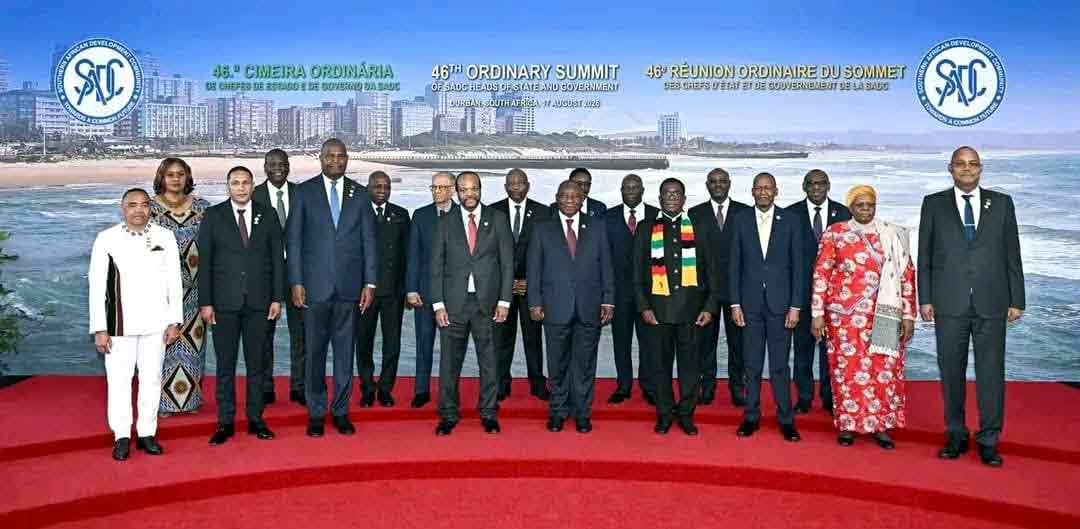
The heads of state and government of the 16 SADC member countries met in Durban on August 17, 2026. The SADC has already urged dialogue to resolve the Madagascar crisis within a clear timeline. A new development is expected at the 46th summit of heads of state, currently underway in Durban. Gathered since yesterday in Durban, South Africa, for the 46th ordinary summit of heads of state and government, regional leaders must address political and security issues concerning the organization, including the situation in Madagascar. The subject is not new. It had already taken center stage at the SADC extraordinary summit held via videoconference on June 29. The Madagascar crisis and the situation in the Democratic Republic of Congo were the two files examined then. For Madagascar, the regional organization had called for the implementation of clear, transparent and inclusive reforms, with specific deadlines and participation of all political actors. In Durban, the tone is already set. South African President Cyril Ramaphosa, current SADC chair, has brought back to the center of debate a principle that could resonate strongly in Antananarivo. 'All our decisions must be implemented,' urged the South African president. A statement made yesterday during the summit's opening ceremony, without explicit reference to the Madagascar case, but coming as several SADC decisions concerning Madagascar remain at the heart of regional expectations. Ramaphosa also stressed the need for dialogue and preventive diplomacy to resolve political crises. 'We must promote preventive diplomacy, mediation and dialogue to resolve political problems,' he declared, calling on member states to 'resolve differences' and act collectively when regional peace and stability are threatened. July 2027 Madagascar's head of state, Michaël Randrianirina, however, did not wait for the summit's opening to present Antananarivo's position. During his meeting with Cyril Ramaphosa in Durban, the day before the official opening of the SADC summit, he recalled the steps already taken by the Madagascar government to try to exit the crisis through dialogue. The Madagascar president notably highlighted the holding of political dialogue as well as the organization of national youth consultation, presented as milestones in the process undertaken to seek a political solution to the crisis. Michaël Randrianirina also presented to his South African counterpart the electoral calendar envisioned by the authorities. He indicated that the first elections in Madagascar should take place in July 2027. A calendar intended to give political perspective to the transition period, while the SADC had precisely requested that reforms be accompanied by specific deadlines. Several SADC missions have already been dispatched to the country since January 2026. The South African president also recalled that 'regional integration does not undermine the sovereignty of member states.' An important clarification, as debates on the region's political crises, particularly in Madagascar, regularly create tension between national sovereignty and collective responsibilities. 'There will be no peace without development,' Ramaphosa also stressed, calling for a new stage of regional integration, bringing 'dignity, opportunity and hope' to the peoples of southern Africa.
Source: Midi Madagasikara