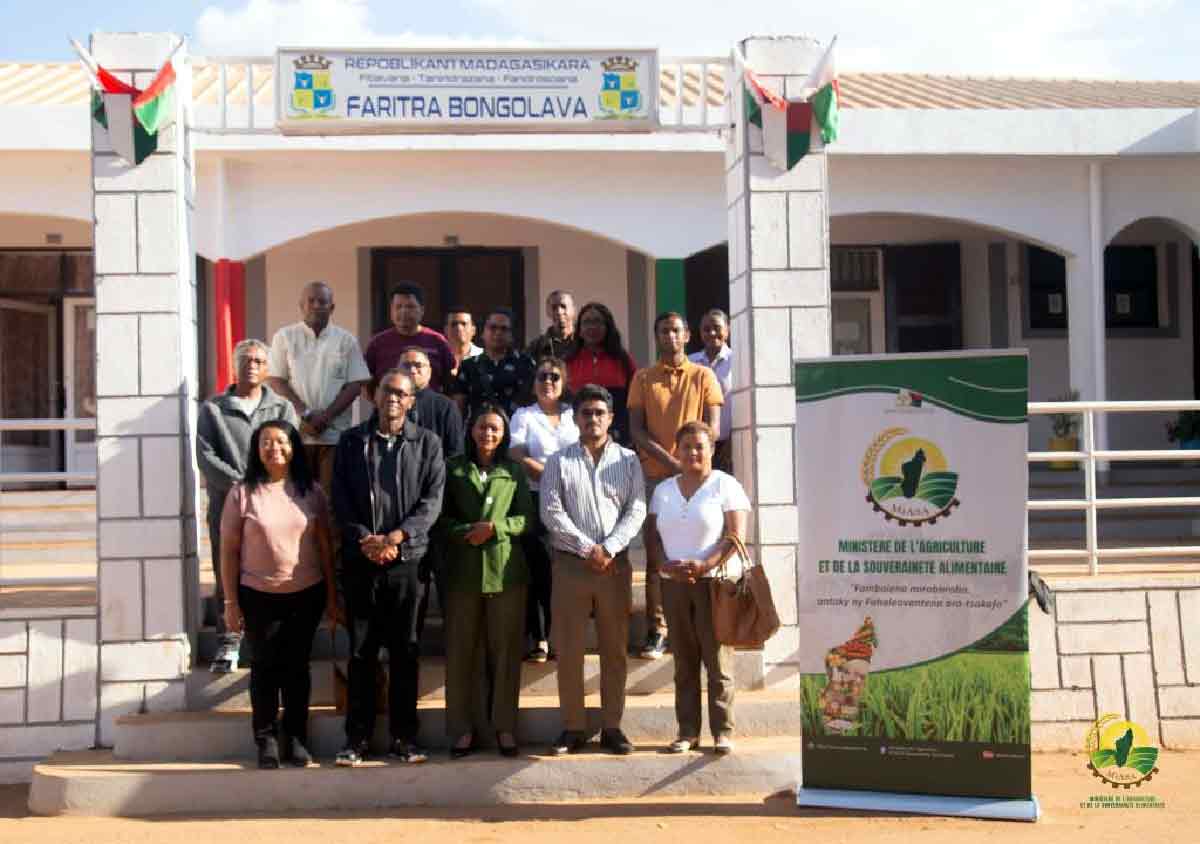
All stakeholders are working to implement the agroparc. An estimated 8,000 hectares of land located in Ampamoizankova, in the Tsiroanomandidy district, Bongolava region, will be developed to establish an agroparc. This project aims to modernize the agricultural sector through the development of agricultural activities and value chains, while stimulating investments and creating decent employment opportunities. Farmers' incomes will improve through technology transfers in the sector, along with the promotion of agro-industrialization. This initiative is led by the Ministry of Agriculture and Food Sovereignty, working closely with the United Nations Food and Agriculture Organization, as part of the implementation of the Hand in Hand program.
Growth engine
More specifically, this agroparc will contribute to transforming a regional agricultural hub into a genuine engine of sustainable growth. Entering its operational phase, the project's initial stages focus on conducting technical studies, strengthening coordination among different stakeholders, and mobilizing relevant partners. These actions should establish the necessary foundations for coherent implementation and effective operation of the Agroparc. Land security is also a priority. This was learned during a consultation workshop dedicated to establishing the Regional Steering and Monitoring Committee for the Bongolava Agroparc (CROSAB), held in Tsiroanomandidy. Various actors involved in implementing this agroparc participated actively.
Climate of confidence
This regional committee's main mission is to coordinate actions, define strategic directions, and ensure follow-up on the implementation of the planned agroparc. To guarantee the success and sustainability of this project, these strategic directions are built around three fundamental pillars. Local realities and potential, as well as the needs of different actors involved in its development, must first be taken into account. Land security then constitutes an important step guaranteeing a climate of confidence to attract investments and protect local interests. The promotion and development of value chains such as rice, corn, and soy, as well as livestock farming that characterizes the Bongolava region, are also essential. Local producer organizations will benefit from technology transfers, easier access to inputs and financing, as well as agricultural mechanization, contributing to improved production and subsequently increased incomes.