Domestic
SADC: Madagascar faces political clarification challenge
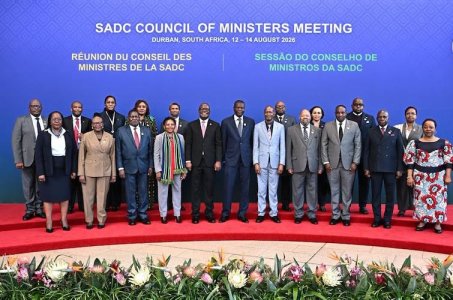
Madagascar will attend the 46th ordinary Summit of the Southern African Development Community (SADC), scheduled for August 17 in Durban, with a unique status. A year ago, the island nation took the helm of the regional organization. This time, it will rejoin its partners without the role of outgoing president, relinquished following the 2025 political crisis. This configuration gives the visit particular significance. Elected to lead SADC at the Antananarivo summit on August 17, 2025, Madagascar was supposed to retain this responsibility until the next meeting. Andry Rajoelina's fall in October disrupted this timeline. On November 1, the new authorities announced their withdrawal from the presidency to focus efforts on the Refoundation process. In Durban, the country shifts from pilot of the regional agenda to partner whose political trajectory remains under scrutiny. Michaël Randrianirina is expected to lead the Malagasy delegation. For the head of state, who has already participated in extraordinary remote meetings, this summit would constitute his first in-person contact with his SADC counterparts. The meeting occurs as the regional organization maintains attention on the transition. In late June, an extraordinary summit examined Madagascar's political and security situation. Several sensitive issues emerged: the fate of political detainees, return of exiles, inclusive nature of national consultation, and respect for the Refoundation timeline. The latter notably provides for an electoral sequence to be completed before the end of 2027. Delays in this timeline now constitute a point of concern. It was recently raised during talks between Michaël Randrianirina and Moussa Saleh Batraki, secretary general of the Organisation of African, Caribbean and Pacific States. Ahead of the summit, Foreign Affairs Minister Alice N'Diaye participates in preparatory work. Madagascar defends regional integration better adapted to constraints of island states, particularly regarding connectivity, infrastructure, and access to investments. Officially, heads of state must primarily work on industrialization, agricultural transformation, infrastructure, and critical minerals development. The Madagascar issue is not, at this stage, listed as a distinct topic announced for their discussions. The Troika meeting of the Organ responsible for political, defense, and security matters, scheduled for the eve, will nonetheless give particular resonance to the Madagascar context. For Antananarivo, Durban represents more than an economic summit. Despite its suspension of African Union activities, Madagascar remains fully engaged within SADC. The challenge will be to reassure partners of the transition's credibility while preserving its place in regional integration. A delicate diplomatic exercise for a country that, in twelve months, will have moved from leading the organization to a position where its own institutional trajectory is now among observed subjects.
Source: Madagascar Tribune