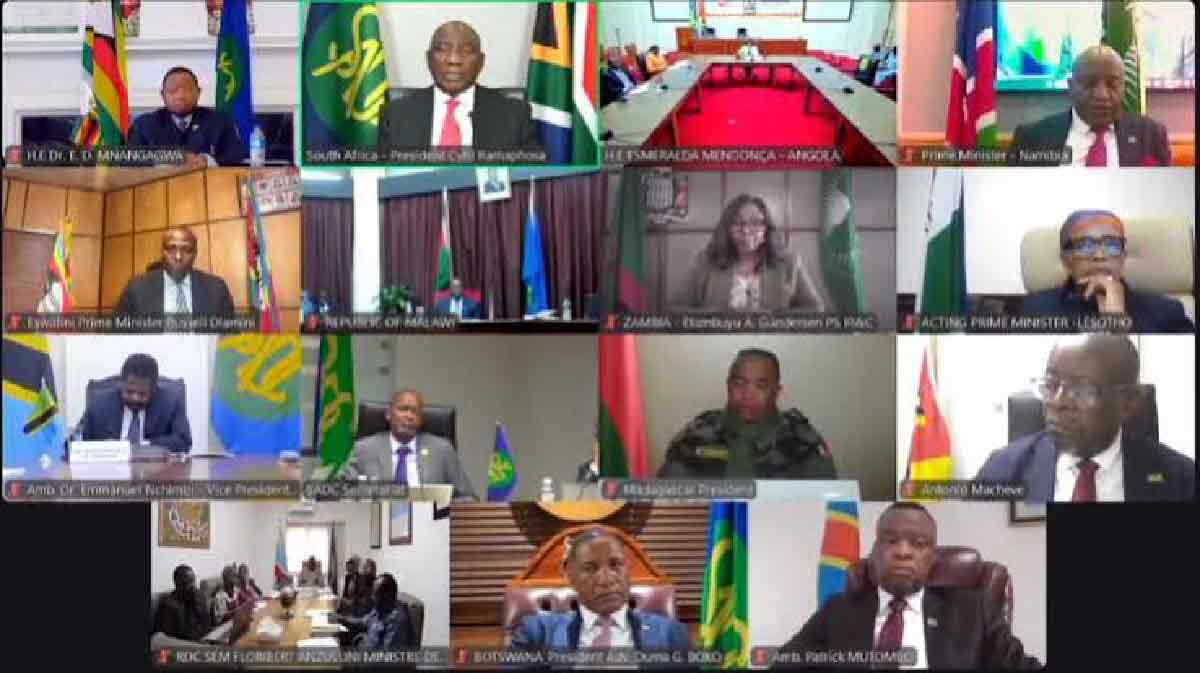
Head of State Michaël Randrianirina participated in the SADC extraordinary summit on June 29. Madagascar's political file returns to the SADC summit in Durban. The 46th ordinary summit of heads of state and government of the Southern African Development Community will be held on August 17 at the Durban International Conference Centre in South Africa. Barring last-minute changes, Michaël Randrianirina will represent Madagascar at the head of an official delegation.
A diplomatic meeting that goes beyond simple regional ritual. Since the regime change in 2025, the Great Island remains under the watchful eye of SADC. In Durban, the evolution of Madagascar's political transition should again be examined by the organization's leaders. Monitoring decisions adopted at previous summits is among the main agenda items. In this context, Madagascar should return to the discussion table, following the virtual extraordinary summit of June 29, dedicated notably to the situation in Madagascar and the Democratic Republic of Congo.
The current government did not wait for the heads of state summit to defend its positions. Last Wednesday, Foreign Minister Alice N'Diaye participated in Durban in the SADC Council of Ministers' work, a preparatory meeting for the August 17 summit. At this forum, Madagascar's chief diplomat emphasized the need for "inclusive, solidarity-based" regional integration based on concrete actions. She also advocated for better consideration of the interests and specificities of island states—a concern directly linked to connectivity difficulties and access to major regional infrastructure projects.
Madagascar intends to benefit more from SADC's project preparation and development mechanism to expand access to investment opportunities and large-scale infrastructure. But behind regional integration issues, the political file will remain the sensitive point of this summit. Since 2025, SADC has multiplied high-level missions, evaluations, and consultations on Madagascar's transition. The regional organization seeks to guide the country toward a return to an institutional order consistent with its commitments.
In Durban, Southern African leaders will thus have a new perspective on the Great Island. For Michaël Randrianirina, the meeting will be as much diplomatic as political. It will be about defending Madagascar's transition trajectory against an organization that, since the regime change, has continually demanded guarantees on the return to institutional order. The Durban ministerial meeting must prepare decisions and strategic orientations to be submitted for approval by heads of state and government on August 17. Madagascar will be there. And once again, its political future will be observed from Southern Africa.
Domestic
46th SADC Summit: Madagascar's Political File on Agenda in Durban
Source: Midi Madagasikara