Domestic
Fuel Supply: GPM Concerned, Refoundation President Rules Out Disruption
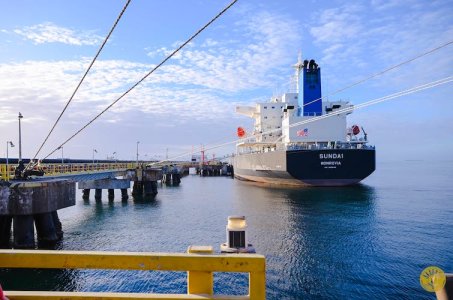
The Petroleum Group of Madagascar (GPM) has expressed concerns about the upheaval in the fuel supply system at the port of Toamasina. The arrival of two tankers in the same period, combined with the State's requisition of the oil terminal's storage capacity, raises questions about cargo reception and distribution continuity. In a statement, the GPM said it had planned the arrival of a vessel carrying diesel, unleaded petrol and kerosene starting August 12, 2026. This operation, prepared months in advance, was intended to renew stocks needed for national market supply. However, the schedule was altered with the arrival of the Sunda 1, chartered by the State through the State Procurement of Madagascar (SPM). Coming from Nigeria, the tanker carries 67 million litres of diesel intended exclusively for Jirama. On August 12, Colonel Michaël Randrianirina personally visited Toamasina port to welcome the vessel. The President of the Refoundation presents this import as an important milestone and a major first, resulting from efforts to strengthen Madagascar's partnerships with other African states. He notably linked this delivery to his meeting two months earlier with Nigerian President Bola Tinubu. "This major step we have just taken demonstrates what I repeat every day: we should focus on South-South cooperation," he declared. For the head of state, the Sunda 1's arrival demonstrates African countries' capacity to develop concrete solutions to their needs among themselves. Six months of fuel for Jirama The cargo is intended to constitute a stock covering approximately six months of Jirama's needs. The President also mentions a difference of 600 to 800 ariary per litre compared to usual conditions, depending on price fluctuations and exchange rates. Securing fuel must now, according to him, be followed by accountability from the national company. "During these six months, Jirama should have absolutely no fuel problems," he insisted. The head of state then intends to examine how this reserve will be managed, even publicly raising the question of fuel theft trends within the company. However, this operation deemed strategic by the State is causing concern among oil distributors. By decree of August 4, Toamasina terminal's storage capacity was requisitioned to prioritize diesel for Jirama. For the GPM, this decision compromises the unloading of its own tanker according to the established schedule. Concerns focus especially on other products on board. The GPM's vessel carries approximately 15,000 m³ of unleaded petrol, as well as kerosene. A prolonged delay could postpone the renewal of these stocks and potentially affect deliveries to the service station network. Storage capacity is also a constraint. Galana Refinery Terminal's capacity for diesel is reportedly limited to approximately 65,000 m³. Receiving volumes from both vessels therefore requires special organization. The GPM mainly reproaches authorities for the lack of prior consultation before modifying an already-engaged supply program. According to the Group, upstream coordination would have allowed anticipating storage, transfer and unloading difficulties. Colonel Michaël Randrianirina reassures The President of the Refoundation does not share the analysis that the Sunda 1's arrival should cause disruptions. Directly questioned about the GPM's statement, he questioned the link between this import and possible market dysfunction. "What would be the reason for disrupting fuel supply to Madagascar because of this? I would like to know what could disrupt supply when we believe this should disrupt nothing," he responded. For the President of the Refoundation, the coexistence of both operations must be resolvable through coordination. "It is a matter of organization. We do not interfere in their business, but for now, it is Jirama we are supplying," he continued, recalling that Sunda 1's diesel is not intended for the traditional commercial market. He justifies this priority by the need to address the national company's difficulties, believing that "Jirama's problems are what make the Malagasy people suffer." Two interpretations thus confront each other in Toamasina. The State considers its import as a distinct operation that can coexist with distributors' activity, while the GPM insists on the constraints.
Source: Madagascar Tribune