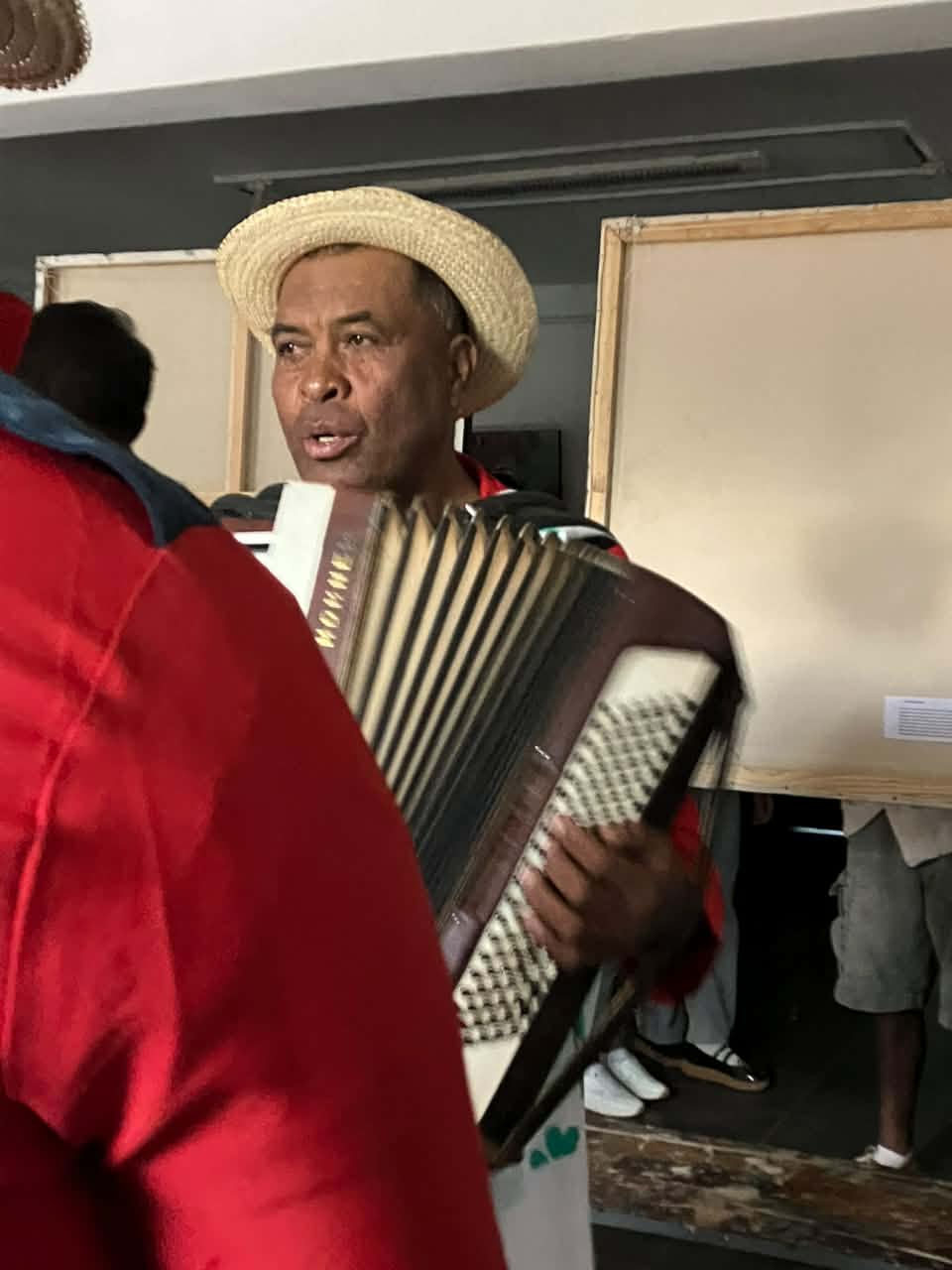
Joseph Rakotoarison, the "patriarch" of the Itaosy-based troupe "Akon'ny diary". The Itaosy neighbourhood is a breeding ground for folkloric music, the "vakodrazana" or ancestral heritage. Such is "Diarin'ny nofy", the troupe of a remarkable man with eternal youth: Joseph Rakotoarison. The creation of "Diarin'ny Nofy", a folkloric group designed to preserve "vakodrazana", is quite atypical. "We were kids, neighbours. We averaged eleven years old, some sang, others danced," recalls Joseph Rakotoarison. Leading the troupe, this sexagenarian remains strong enough to lift a heavy accordion. These budding artists' beginnings unfolded in Itaosy.
Two major opportunities would then transform the band's destiny. The meeting with Dada Gabhy, founder of the Voninavoko group, a living "artistic school" of folkloric music. Then came the competition organized by the neighbourhood in 1975. At that time, the "fokontany" still had a creative role, not merely a paperwork office. "Competitors could win stage costumes for the troupe, drums, hats," Joseph Rakotoarison explains. Thanks to their mentor, the small band improved, as they found no better way to "grow". Dada Gabhy composed a title for them, "Ny fahadiovana". Seeing their potential, neighbourhood parents decided to support them. The wind seemed to blow in the right direction. Years passed. "Part of our team joined Voninavoko," adds the troupe leader. Later, another joined Tanamasoandro. The end of a beautiful epic begun before adolescence.
He continues: "The Itaosy neighbourhood is a breeding ground for 'vakodrazana' troupes: there are at least six here." Then, in 2010, Joseph Rakotoarison's troupe was born: Akon'ny diary. For once, he faced the "reality" of professional activity. A folkloric music troupe should ideally have no fewer than twenty members: musicians, male and female dancers, singers... Add to this costumes and musical instruments. "Generally, four criteria define a troupe: the way of dressing, hairstyle, instruments, and finally the combination of singing and dancing," he explains. However, a decent salary is not always guaranteed. Especially since the advent of digital technology and computers in the 2000s, this discipline suffered major losses. Only the most "stubborn" dare venture into it. Without them, ancient songs like "Mandihiza rahitsikitsika", "Mazava atsinanana"... risk being forgotten. Or traditional dances such as "dihy soroka", "latsitanana", "tsinjaka", "dihy safolaka", "soamiditra" and others.
Joseph Rakotoarison's opinion is unequivocal: "The 'hira gasy' is a constitutive element of 'vakodrazana'". Not the other way around. According to his explanations, the ancestral dance of Imerina resembles very ancient Indian dances. The eyes, hand and foot movements, head positions and many small details are codes of expression. Only the initiated know their practice and meaning. His research led him to encounter other folkloric troupes across the island. "We, in Madagascar, share these codes. True traditional dance, that inherited from our ancestors, is truly different," he emphasizes. Then there is the famous "6/8", the ternary rhythm, found throughout the island. To Joseph Rakotoarison's pride, the market is picking up now. "Malagasy people tend to call on us for weddings, turning of the bones ceremonies and even anniversaries." His best memory this year is seeing a family bring a live sheep to a "vodiondry", traditional wedding, to put it simply. "Twice this year, I saw that during our performances."