Domestic
Oil Sector: Risk of Fuel Distribution Disruption on National Market
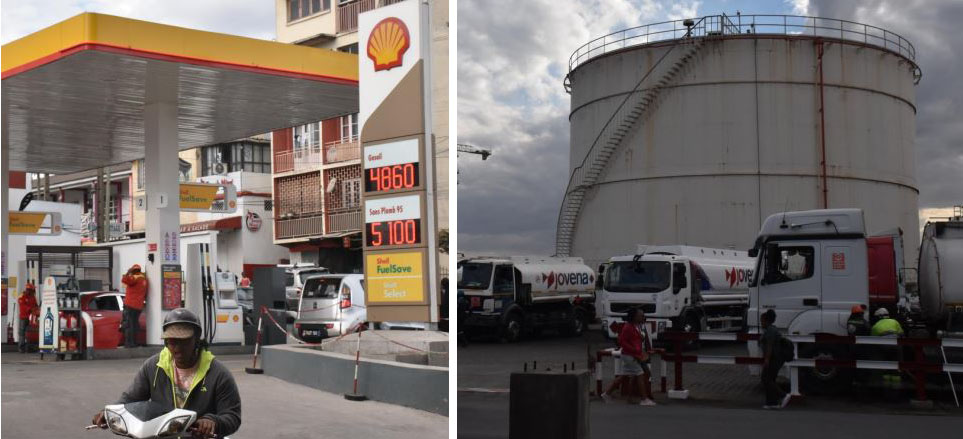
Petroleum logistics management faces potential complications. Disruption to the usual supply system for petroleum products risks causing unexpected harmful consequences on the country's oil market. In a statement released two days ago, the Petroleum Group of Madagascar (GPM) issued an alert about possible adverse effects of such a change, made without prior consultation with industry professionals. Two Shipments The country risks receiving two petroleum product shipments, whose management could prove complicated. Under the usual supply arrangement for the Malagasy market in petroleum products, the GPM had planned the arrival at Toamasina port, starting August 12, 2026, of a vessel carrying diesel, unleaded fuel, and kerosene. "This import was organized in accordance with applicable texts and procedures and communicated to concerned stakeholders to ensure continuity, regularity, and security of the country's supply," the GPM stated in its communiqué. Simultaneously, the Malagasy State announced the chartering of another vessel through an authorized entity, also scheduled to arrive August 12, 2026, carrying exclusively diesel. The State also decided to requisition storage capacity at Toamasina's petroleum terminal. This requisition makes it impossible to unload the vessel chartered under the GPM's supply program. According to the GPM, "such modification of the supply system, decided without prior consultation with concerned operators, is likely to cause significant consequences on the organization and balance of the national supply chain, particularly regarding storage capacity, transfer, and fuel distribution." Lack of Prior Consultation "Cancellation or disruption of an already planned supply covering multiple petroleum product categories could affect the balance of available stocks and consequently national distribution, particularly of unleaded fuel and kerosene," the GPM stated. "Such a situation could also expose distributors to difficulties in fulfilling their contractual commitments to suppliers and partners, with significant operational and financial impacts," added the Group, which regrets the absence of prior exchanges between administration and professionals. "Prior consultation between the State, sector operators, and all stakeholders would have allowed anticipation of these constraints and identification of the most suitable solutions to preserve the country's energy security and market supply continuity," according to the GPM, which nonetheless displays determination to collaborate for the oil sector's benefit. "The GPM and its members remain fully mobilized to fulfill their missions and contribute, within their available means, to the continuity of supply to the Malagasy market." The GPM recalls, however, that its members cannot be held responsible for potential consequences on availability, regularity, or distribution of petroleum products resulting from decisions unilaterally modifying a supply system previously planned, initiated, and successfully implemented for over twenty years.
Source: Midi Madagasikara