From August 11 to 13, 2026, the HIMO training center in Antsirabe hosts the annual general assembly of the Network of Journalists Specialized in Employment and Work (RJSET). Between mastering artificial intelligence, immersion in development projects and developing a roadmap for 2026-2027, media professionals are sharpening their skills to transform coverage of socio-economic issues in the Great Island.
A decade of commitment to social justice. As Madagascar faces significant structural challenges in the labor market, the issue of decent work ceases to be a mere technical concern to become a major national issue. For more than a decade, the International Labour Organization (ILO) Bureau for Madagascar, Comoros, Mauritius and Seychelles has collaborated closely with the Network of Journalists Specialized in Employment and Work (RJSET). This network of professionals, present in different regions of the island, is the driving force behind reliable, rigorous and accessible social information for the general public. The alliance between the ILO country office in Antananarivo and journalists members of RJSET is based on a shared conviction: no sustainable social progress can be achieved without an informed public debate. In his opening address, Frederick Muia, director of the ILO Bureau for Madagascar, Comoros, Mauritius and Seychelles, recalled the essential role of the media in promoting social justice and decent work. He emphasized the importance of reliable, accessible and responsible information to better publicize issues related to employment, rights and work, social protection and social dialogue.
Antsirabe 2026: a strategic meeting with high added value. The Antsirabe gathering is not a mere statutory meeting. Over three intense days at the HIMO training center, journalists from across the Great Island participate in a dense program combining strategic orientation sessions, advanced technical training and practical field work. One of the major highlights of this workshop is the direct presentation of major projects executed by the ILO in Madagascar. Project leaders of flagship programs such as TOHATRA-PNUE, ERR-PROGRES, OSHE and HIMO exchange directly with journalists. This technical showcase allows identifying human stories, local innovations and concrete data that will feed future investigations and reports from print media, radio, television and digital media.
Artificial intelligence in service of journalistic truth. Facing rapid technological changes, the meeting devotes special attention to the digital transformation of journalism. The integration of artificial intelligence and digital tools offers unprecedented perspectives for documentary research, processing large volumes of data and rigorous fact-checking. However, this transition is accompanied by a strict ethical framework. Training modules emphasize responsible use of digital technologies, prevention of algorithmic bias, combating misinformation and absolute protection of personal data, thus guaranteeing the integrity of information delivered to citizens.
Permanent vigilance against risks and disasters. Through the territorial network of its members, RJSET also strengthens its function as an alert and social monitoring network. In a country regularly facing climate and socio-economic shocks, the ability of regional journalists to quickly report reliable information on working conditions and precarity is a valuable asset for guiding emergency interventions and adaptation policies. The adoption of the 2026-2027 action plan following the Antsirabe work thus seals the renewed commitment of the specialized press in favor of a more equitable, just and inclusive future of work for all the Malagasy population.
Domestic
Decent Work and Social Justice: RJSET Becomes Pillar of Strategic Communication in Madagascar
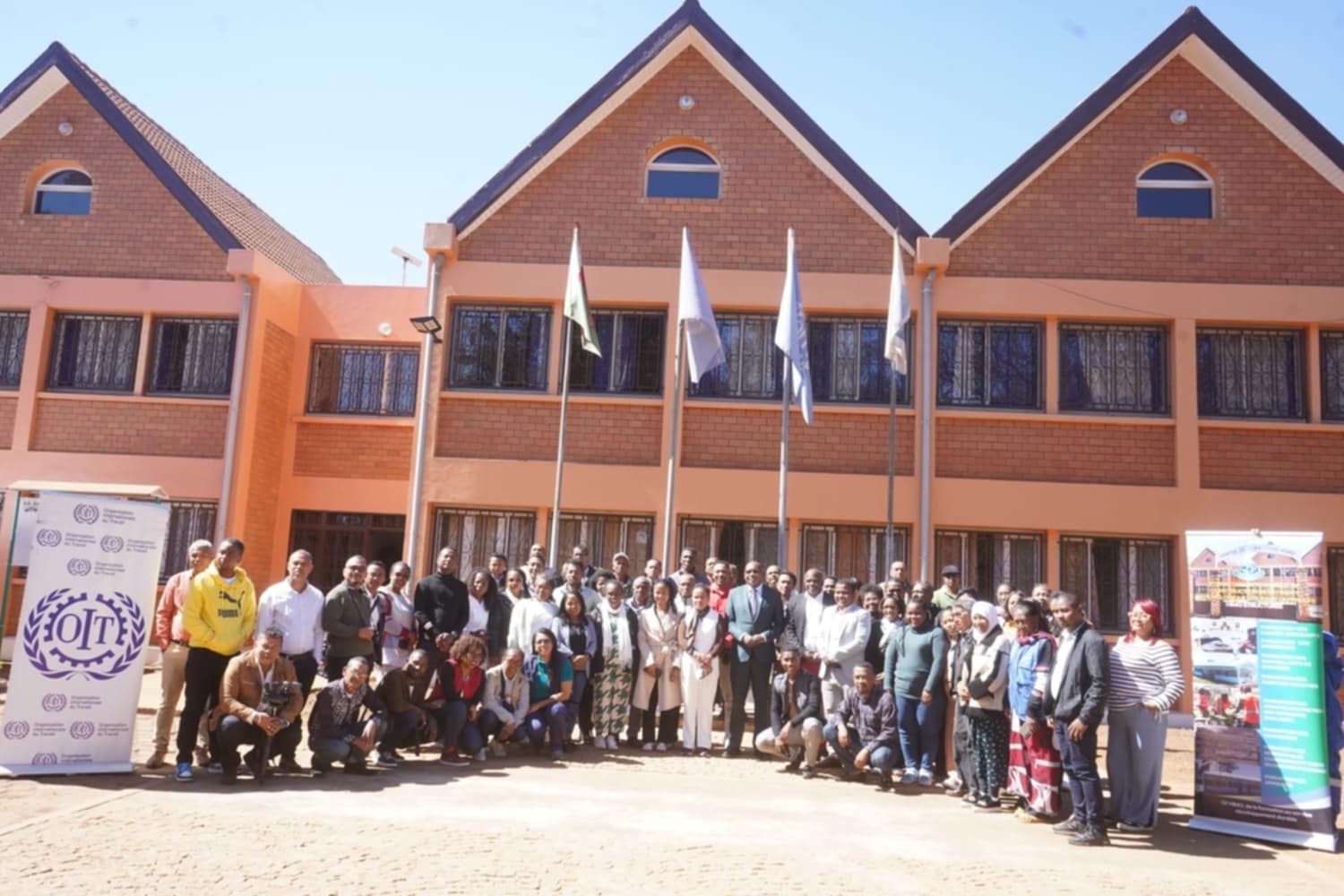
Source: Midi Madagasikara