Society
Biodiversity: New giant earthworm species discovered at Nosy Be
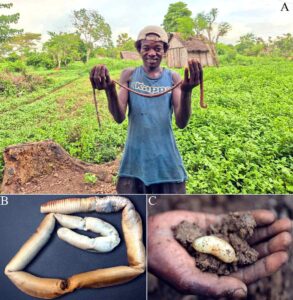
A scientific expedition conducted in northern Madagascar in 2025 has revealed a new earthworm species, named Kynotus insularis. The discovery, published in the scientific journal ZooKeys, brings the number of known species in the endemic Kynotidae family to 23 and highlights the vast unexplored portion of Madagascar's biodiversity. Measuring up to approximately 80 cm when alive, with a diameter reaching 17.5 mm, Kynotus insularis was discovered on Nosy Be island, in Ambanja district, at only a few dozen meters altitude. The species notably displays dark red coloration on its back and anatomical characteristics that distinguish it from other Kynotus species. Its name, insularis, directly references its island habitat. This discovery is not the only remarkable result of the expedition. Researchers also found Kynotus darwinii, a species described in the 19th century that had not been collected since its initial observations. This rediscovery underscores how difficult certain components of Madagascar's fauna remain to document. The identification of Kynotus insularis was confirmed through both morphological study and sequencing of a DNA fragment called COI, used as a "genetic barcode." Analyses notably show a genetic distance of 23.4% with Kynotus proboscideus, confirming the distinction between the two species. Of the 23 Kynotidae species currently known, nine have not yet been found during recent field campaigns. Madagascar's earthworm fauna therefore remains largely under-explored.
Source: Midi Madagasikara