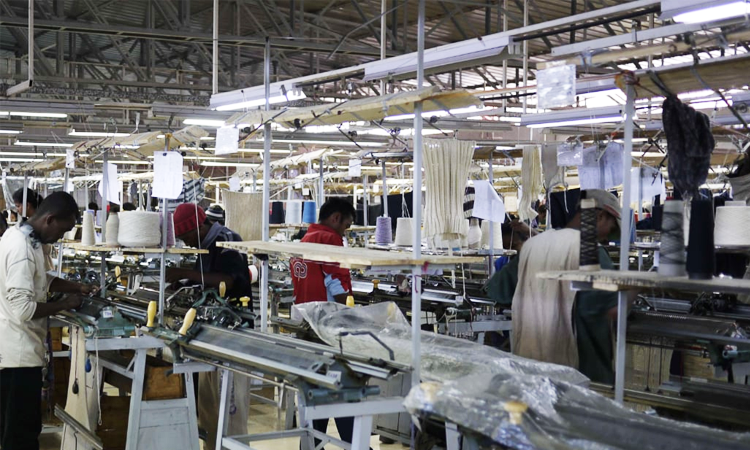
Madagascar's textile industry is among the main beneficiaries of opportunities offered by AGOA on the American market. The US Senate voted overwhelmingly in favor of extending AGOA until December 31, 2028. A major breakthrough for Madagascar, particularly for textile and clothing companies targeting the American market. A strong signal from Washington. By 90 votes to 6, the US Senate voted on August 8 in favor of extending AGOA until the end of 2028. Only two Republican senators and four Democrats voted against, demonstrating broad bipartisan consensus around maintaining this trade mechanism with sub-Saharan Africa. For Madagascar, the decision is far from trivial. AGOA has been a major lever for years in accessing Malagasy products to the American market, particularly for the textile and clothing industry. The mechanism allows eligible African countries to export a wide range of products to the United States while benefiting from preferential access. More broadly, AGOA was designed as an instrument to support economic growth and strengthen trade relations between the United States and sub-Saharan Africa.
Visibility for businesses
The key issue is predictability. Uncertainty about the future of the mechanism was a risk factor for companies, which must plan their orders, investments and production capacities several months or even years in advance. The Senate vote thus offers an additional perspective until December 31, 2028, even though the legislative process must still be finalized. The H.R. 6500 text had already been adopted by the House of Representatives in February. In the meantime, AGOA had been extended until December 31, 2026, with retroactive effect from September 30, 2025. American President Donald Trump signed this extension on February 3. Since the text voted in the Senate underwent modifications, it must now return to the House of Representatives. According to Global Business Council, it should take up the matter after the summer break in September. Once both chambers agree on an identical version, the text must still be submitted for presidential approval.
Textile preserved
Another crucial point for clothing-producing countries: the so-called "Third-Country Fabric" mechanism is maintained. This allows eligible African countries to use fabrics or yarns from third countries to manufacture clothing that subsequently benefits from AGOA preferences on the American market. For an industry like Madagascar's, integrated into international supply chains, this provision is particularly strategic. The new version of AGOA also reflects the evolution of American priorities. It notably includes a section dedicated to critical minerals and aims to facilitate US access to resources from beneficiary countries as well as their processing. Washington also wants to move toward trade relations based more on reciprocity. US Trade Representative Jamieson Greer had already stated in February that the future AGOA should offer more opportunities for American businesses, farmers and producers. In short, the prospect of AGOA until 2028 represents an opportunity for Madagascar, but also a window of time to capitalize on consolidating investments, exports and industrial employment.