Domestic
Where to Hold On – Chapter 2. The Interrupted Builders
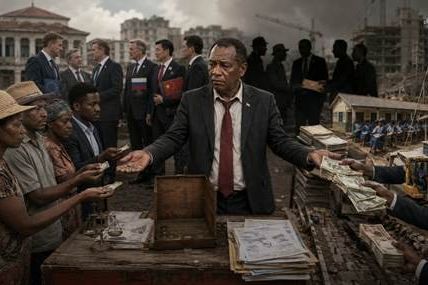
Madagascar's problem is not so much a lack of builders and vision, but the absence of institutional architecture to survive their departure. Without a fiscal contract and without financial autonomy of the State (tax pressure at 10-11%), no political vision can endure. It is time to move from moral judgment (seeking a savior) to institutional judgment (building a system). "Let us clarify the ambiguity: being able to plan one's political succession (cf Andry) does not automatically make a leader a state builder. The distinction is fundamental between the art of staying in power and the capacity to build lasting economic and fiscal structures." There were visions Some poor thinkers will object—but with some reason—that the diagnosis of the previous section is too convenient: by constantly talking about structures, we end up exonerating men. Yet Malagasy history, contrary to prevailing fatalism, has known leaders capable of thinking twenty years ahead. It simply lacked, systematically, a place where this vision could survive the person who carried it. Andrianampoinimerina, who ruled Imerina from 1787 to 1810, offers the most accomplished example. His work on irrigating rice paddies, his gradual unification of the kingdom were not matters of sudden brilliance or a vision of Miami on Pangalanes… but patient accumulation, spread over twenty-three years, without major disruption. It is no accident that it is precisely duration—and not merely the quality of vision—that allows the work to take root: an irrigation system is not judged over one season, but over generations of maintained rice paddies. Radama I built, for his part, over eighteen years in another register: opening schools, transcribing Malagasy in Latin characters, sending students to Mauritius and London. Undoubtedly the work of a builder… And yet defeated in mere years by Ranavalona I after his death. Vision was not lacking. What was lacking was a mechanism capable of sustaining it independently of the physical and political survival of its author. Thinking far is not enough It would be false, however, to reduce modern Malagasy history to mere failures of transmission. Ratsiraka did think long-term, with the Socialist Revolution of 1975. But thinking far is not enough if the course is wrong. A twenty-year vision poorly oriented produces a twenty-year disaster. We have not finished recovering from the errors of that experience… Or should one have gone all the way??? Could there have been delayed success? No lo se… The retrospective evaluation of Ravalomanana, with his MAP—Madagascar Action Plan 2007-2012—is no less ambiguous: a participatory plan over ten years, built with real methodological concern (even if it seemed too much like a World Bank laboratory to my taste)… abruptly broken by the 2009 coup. I already posed in 2009, on this same blog, the question of the sincerity and relevance of this vision. It remains open; it would be dishonest to settle it with retrospective certainty that the facts do not permit. But whatever the answer, the fate of the MAP illustrates the same lesson: no vision, however well conceived and honestly carried, survives a regime rupture if nothing has been built beforehand to protect it. From moral judgment to institutional judgment The most disturbing lesson of this four-sequence evaluation is here. Andrianampoinimerina, Radama I, Ratsiraka
Source: Madagascar Tribune