Domestic
Growth slips to 3% as inflation threatens to hit 10.1%
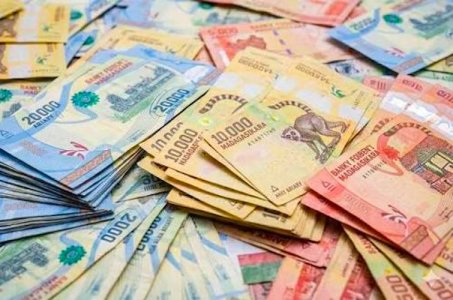
Madagascar's economy is heading toward year-end under strain, caught between slower-than-expected growth and persistent inflationary pressures. According to the Monetary Policy Report recently published by Banky Foiben'i Madagasikara (BFM), national economic growth is estimated at 3% in 2026, while the Amended Finance Law (LFR) projects 3.8%. To reach the government's forecast, an acceleration of activity in the second half will be necessary. The business situation illustrates this fragility. In the second quarter, formal business activity remained in decline. The Synthetic Indicator of Business Activities (IAE) stood at -5.3%, compared to -39.9% in the first quarter. While the contraction has eased considerably, it still affects most business categories. Only large enterprises recorded a slight rebound during the period. At the national economy level, signals are more encouraging. The Intra-annual Economic Activity Indicator (IIAE) advanced 4.8% compared to the previous quarter. On an annual basis, improvement remains modest at only 0.3%. Third-quarter prospects suggest a possible recovery in formal business activity, mainly supported by primary and tertiary sectors. The IAE is thus projected at 17.5%. This expected recovery risks, however, hitting a major obstacle: accelerating inflation. After standing at 6.8% at end-March, year-on-year price increases reached 8.6% in June. Core inflation rose to 11.4%, reflecting pressures not limited to volatile components like rice and energy. Year-end projections are even more concerning. BFM estimates that overall inflation could reach 10.1% in December 2026, versus 9.3% in its previous forecast. Rice prices would advance 7%, energy prices 9.7%, while core inflation would still reach 11%. On an annual average basis, overall inflation would be 8.5%. To contain this price surge, the Monetary Committee decided to raise the policy rate from 12% to 12.5%. The measure aims notably to preserve financial stability and gradually bring inflation back toward the medium-term target of 5%. The country nonetheless maintains resilience on the external front. Official foreign exchange reserves reached $3.676 billion at end-June, equivalent to seven months of imports. During the first half, the ariary appreciated 7% against the dollar and 9.3% against the euro. The coming months will therefore be decisive. Between still-fragile business activity, growth estimated at 3% against the 3.8% in the LFR, and inflation likely to exceed 10%, the challenge will be consolidating recovery without letting price increases further erode purchasing power and economic momentum.
Source: Madagascar Tribune