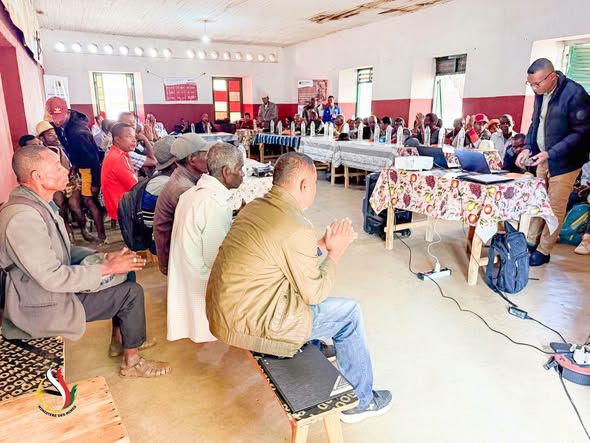
An information workshop on the Mining Code was recently held in the Androy region, a mica production zone. The Ministry responsible for Mines organized this workshop in the rural commune of Antanimora Atsimo, located in the Androy region. All stakeholders working in the mining sector participated actively, including representatives of local authorities at all levels, local economic operators, mica mining operators who have built the region's reputation, civil society members, buyers and weighers, as well as technicians from the supervising ministry.
Following this information workshop, participants agreed that obtaining exploitation authorization and mining permits of different categories must go through competent authorities at all local levels, namely the region, district, and commune, for hierarchical validation.
These state bodies also committed to supporting formal mining projects implemented under their jurisdiction. However, they demanded strict reinforcement of all field monitoring and controls, while establishing an information exchange platform for better transmission of project impact information. Financial transparency is also required at the local level. For example, revenues from mining operations received by each decentralized territorial authority must be displayed in each commune office, including rebate amounts and mining administration fees. These funds will subsequently be managed through participatory budgeting, contributing to better governance of municipal revenues and local socio-economic development, as the population participates in decision-making on investments to be made. Better appropriation of mining projects in their locality and social peace are also positive outcomes of this initiative.
The revision of mica prices in the field was also discussed among all stakeholders during this workshop, organized in collaboration with the international organization RMI (Responsible Mica Initiative) and UNDP. This entity aims to transform the mica extraction sector into a sustainable, transparent model that respects human rights, particularly in the two main global producing countries: Madagascar and India. Eliminating child labor, promoting decent work, establishing a traceable supply chain, and supporting community development are its main missions.