Domestic
Madagascar's Financial Sector Shows Resilience
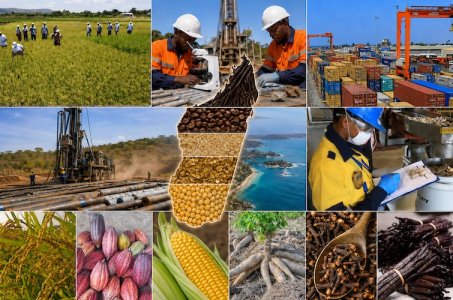
Madagascar's financial sector continues to demonstrate its capacity for resilience despite an economic context marked by cyclone impacts, international market tensions, and budgetary constraints. This emerges from the latest analysis published by S&P Global Ratings, which indicates that Madagascar maintains sufficiently solid fundamentals to preserve its financial equilibrium. The agency maintains the country's sovereign rating at "B-" with a stable outlook, noting that foreign exchange reserves, public debt levels, and support from international partners remain major assets. The analysis emphasizes that international reserves remain at comfortable levels, covering more than six months of imports. Public debt is deemed sustainable thanks to its structure, largely composed of concessional long-term borrowing and relatively low interest charges. This situation allows the country to better absorb successive economic shocks while maintaining budgetary flexibility. While economic growth has slowed over the past two years, prospects remain positive. After estimated growth of 3% in 2025, the economy should register 3.1% growth in 2026, before gradually accelerating to 3.8% in 2027, 4% in 2028, and 4.2% in 2029. This slowdown is notably attributed to declining exports of vanilla, nickel, and coffee, as well as reduced private investment and postponed donor-financed projects. Despite this context, several sectors continue supporting activity. Agriculture shows resilience, particularly through rice, corn, and cassava production. Medium-term recovery should also be driven by renewed investment in transport and energy infrastructure, post-cyclone reconstruction, and stronger global demand for nickel, stimulated by electric vehicle industry development. Mining sector reform also provides optimism. After sixteen years of freeze, the state reopened the possibility of granting new exploitation permits. Over 1,600 applications should be reexamined under a new regulatory framework designed to strengthen investor legal security and restart long-pending projects. The energy sector remains one of Madagascar's main economic challenges. The country remains heavily dependent on petroleum product imports, though hydroelectricity already represents nearly 45% of national electricity production. Several hydroelectric, solar, and thermal projects should more than double production capacity in coming years and gradually reduce this energy dependence. Externally, the current account deficit should widen in 2026 due to declining export revenues and the weight of food and energy imports. This situation is nonetheless mitigated by diaspora financial transfers, representing approximately 6% of GDP, and substantial foreign exchange reserves. The analysis also highlights continued commitment from technical and financial partners. Despite delays in certain reviews of the IMF-supported program, prospects remain favorable for continued cooperation. The World Bank and other donors continue financing several structural projects, though future support will remain linked to reform continuation and institutional stability maintenance. Public finances should experience temporary deterioration with a budget deficit expected at 4.7% of GDP in 2026, compared to 2.6% in 2025. This evolution is mainly explained by post-disaster reconstruction spending, fuel support measures, and less dynamic tax revenues. The deficit should gradually decrease as economic growth consolidates. Finally, the Central Bank is commended for measures implemented to preserve ariary stability and contain inflationary pressures. Inflation, estimated at 8.4% in 2026, should gradually return to around 5% by 2029. According to this analysis, continued economic reforms, improved business climate, energy sector development, and political stability will be the main levers enabling Madagascar to durably strengthen its financial solidity and progressively improve its economic credibility on the international stage.
Source: Madagascar Tribune