Economy
S&P Maintains Madagascar's Sovereign Rating at 'B-' with Stable Outlook
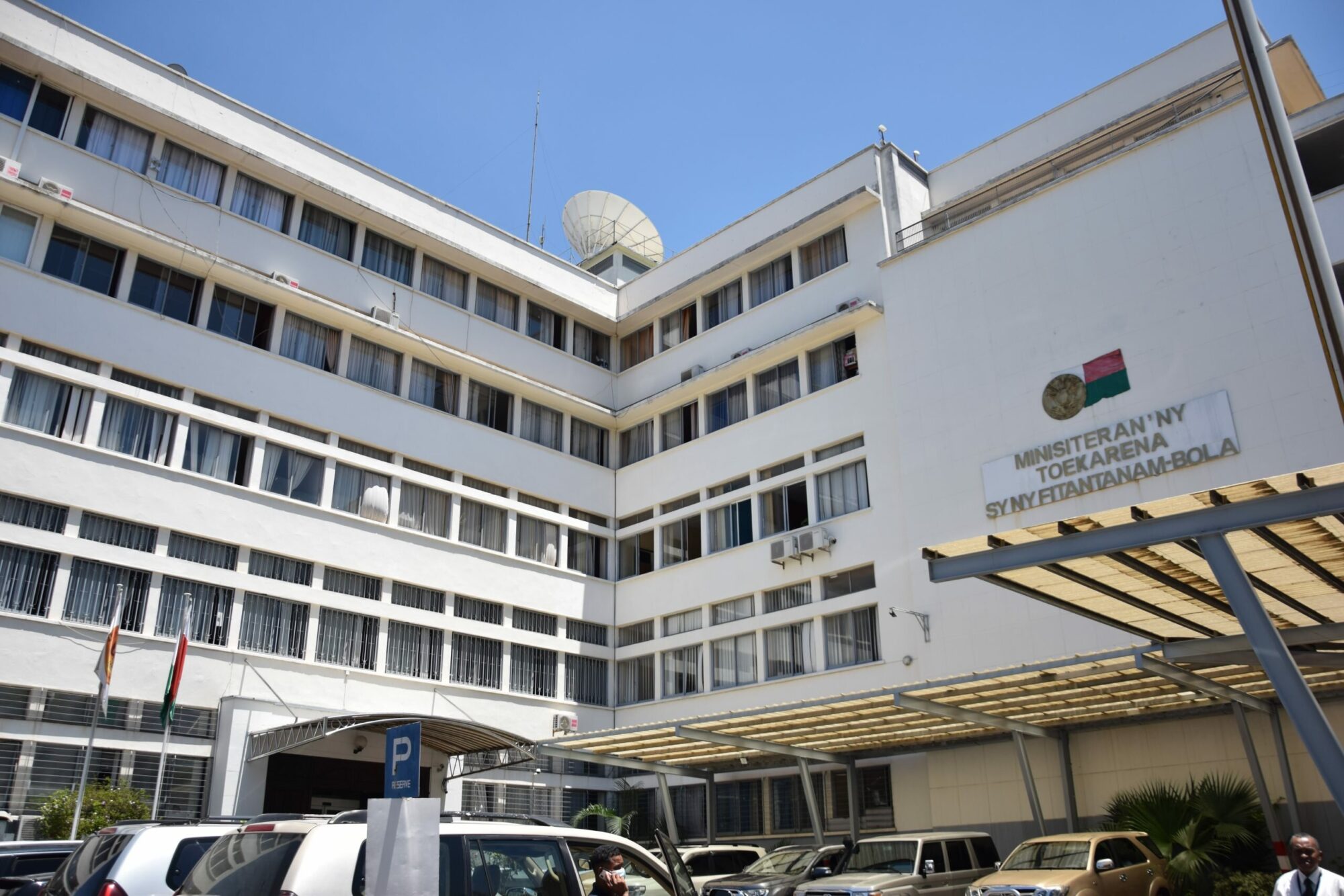
Madagascar has maintained its sovereign rating despite multiple shocks. The financial sector in Madagascar is performing well, despite a succession of internal and external shocks. S&P indicates in its report solid external reserves and manageable debt, despite economic pressures. S&P Global Ratings maintains Madagascar's sovereign rating at 'B-' in both foreign and local currency, with a stable outlook. In its report published on July 27, 2026, the international agency estimates that the country retains several resilience factors, notably a satisfactory level of foreign exchange reserves, continued support from numerous international partners, and a public debt structure deemed favorable. These strengths currently help offset political uncertainties, low per capita income, budget pressures, and climate risks. The document notes, however, that this does not constitute a new rating decision, but an update of the analysis of Madagascar's situation. The agency forecasts economic growth of 3.1% in 2026, following a slowdown to 3% in 2025, compared to 4.3% in 2024. This evolution would be linked to weakness in certain exports, notably vanilla, nickel, and coffee, but also to a slowdown in private investments and several projects financed by partners. Agriculture, particularly rice, corn, and cassava sectors, has shown resilience. In the medium term, S&P expects gradual recovery, with growth of 3.8% in 2027, 4% in 2028, and 4.2% in 2029. Several drivers could support this improvement. The agency mentions expected increases in global nickel demand, driven by the electric vehicle industry, reconstruction after cyclones, and planned investments in transport and energy infrastructure. The mining sector reform, which ended a 16-year freeze on new permits, could also revive long-blocked projects. Over 1,600 applications are expected to be reviewed under a clarified regime, notably providing for a 5% royalty and stability guarantees. The energy question remains central to concerns. Madagascar remains heavily dependent on petroleum product imports, while biomass represents nearly 80% of the national energy mix. Hydroelectricity provides approximately 45% of electricity production, offering partial protection against international price volatility. According to S&P, tensions observed in petroleum markets in 2026 affected transport, industry, and public finances. The agency believes, however, that hydroelectric, solar, and thermal projects could more than double production capacity over the next three to four years. On the external front, the current account deficit is expected to widen to 8.5% of gross domestic product in 2026, after 6.1% in 2025. This deterioration is explained by declining revenues from certain export products, combined with the structural importance of food and energy imports. Diaspora transfers, representing approximately 6% of GDP, constitute important support. International reserves, exceeding six months of imports at end-2025, remain an essential buffer against external shocks. S&P also emphasizes the continued commitment of donors. Despite delays in reviews of the program supported by the International Monetary Fund, the agency expects a combined review to be held before year-end. The World Bank and other official creditors have maintained financing for several projects. Budget support remains, however, dependent on reform progress and institutional stability. On the public finance side, the budget deficit is expected to rise from 2.6% of GDP in 2025 to 4.7% in 2026. This increase would result notably from reconstruction spending after cyclones, fuel price support, and revenue constraints. The deficit should then gradually decline to 4% of GDP by 2029, as growth strengthens and energy subsidies decrease. Public debt remains at a level deemed manageable. Gross debt is expected to represent 40.2% of GDP in 2026, before reaching 44.2% in 2029. Its long maturity, largely concessional nature, and relatively low interest burden reduce immediate risks. S&P draws attention to the challenges ahead.
Source: Midi Madagasikara