Domestic
Federal or Unitary State: Voters to Decide in Referendums
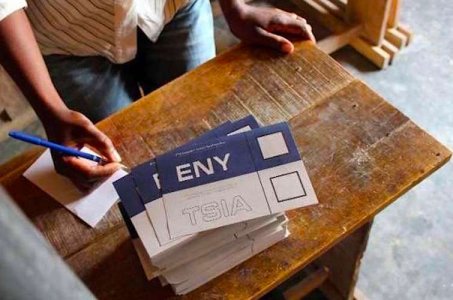
Madagascar's future institutional architecture is shaping up as one of the main issues in the transition to the Fifth Republic. Following the National Youth Assembly held at the International Conference Centre (CCI) in Ivato, debate over the form the State should take has overshadowed other recommendations from representatives of the twenty-four regions. Faced with controversies surrounding this question, the president of the Refoundation, Colonel Michaël Randrianirina, reminded participants that the decision would belong neither to political leaders nor to those involved in consultations, but to all citizens called upon to vote by referendum on the future Constitution. During the closing ceremony, the head of state explained that proposals from the Assembly constituted a reflection stage before broader national consultation. According to him, institutional guidelines will be debated at the national level before being submitted to popular vote. He also indicated that resolutions drafted by young people would be transmitted to the FFKM and that he would personally ensure their consideration in the refoundation process. The president stressed the central role of youth in transforming the country, believing that no lasting reform can be undertaken without their involvement. Among the recommendations that drew attention is the proposal to offer Malagasy citizens a choice between two institutional models. The first is based on a strongly decentralized unitary state, accompanied by a tricameral parliamentary system. The second envisages the creation of a federal state, in which powers would be distributed between a federal authority and federated provinces enjoying greater autonomy. Participants also recommended the creation of a technical committee responsible for drafting constitutional texts that could later be submitted to popular vote. The two models present profound differences. In a strongly decentralized unitary state, sovereignty remains concentrated at the national level. Territorial authorities have expanded powers to manage local affairs, but exercise these responsibilities within the framework set by the central state. This system generally aims to bring decisions closer to citizens while preserving the country's legal, administrative, and political unity. One particularity mentioned in this proposal is the establishment of a tricameral parliamentary system. Unlike the current system, where Parliament comprises two chambers—the National Assembly and the Senate—a tricameral Parliament would consist of three distinct assemblies. The first would traditionally represent the population through direct election of deputies. A second chamber could defend the interests of territorial authorities as the Senate has done, while a third could represent economic, social, cultural forces or traditional authorities. The exact contours of such an organization remain to be defined, as this type of Parliament is exceptional worldwide and would require precise distribution of powers to avoid institutional deadlocks. Conversely, a federal state operates on different logic. Federated entities, whether provinces or regions, possess their own powers guaranteed by the Constitution. They can directly exercise certain powers, while sovereign domains such as defense, foreign affairs, or currency generally remain the responsibility of federal authority. Supporters of this formula believe it would promote more balanced development between territories and better consideration of local realities. Its opponents fear it could encourage political or territorial divisions likely to weaken national cohesion. During his address, the president of the Refoundation announced the upcoming organization of political dialogue bringing together former heads of state, political parties, youth representatives, and other national actors, in line with expectations expressed by several international partners. He also invited young people not to be influenced by external political interests and recalled that the Constitution guarantees freedom of religion while establishing the principle of separation between religious convictions and management of public affairs.
Source: Madagascar Tribune