Domestic
National Sovereignty: Madagascar Faces New Balance Challenges
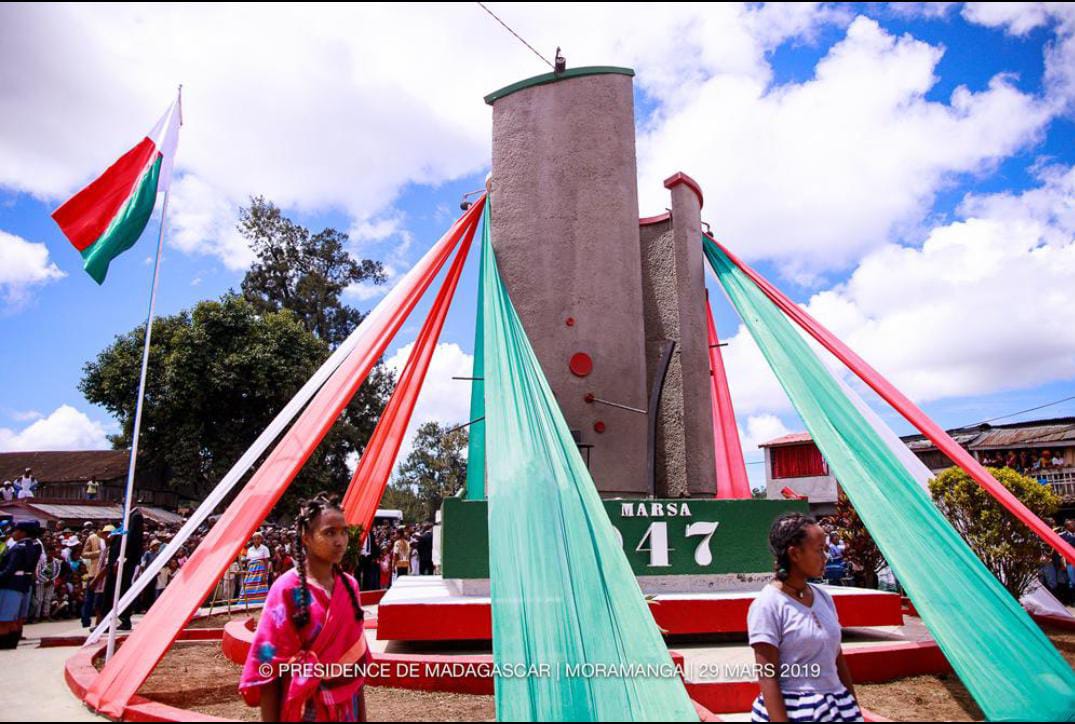
The commemoration of March 29, 1947 recalls an important chapter in Madagascar's history. Attorney Saïd Larifou advocates for a strengthened vision of Madagascar's national sovereignty. Madagascar's geographical position in the Indian Ocean represents a major strategic asset. Attorney Saïd Larifou calls for stronger affirmation of the Great Island. As global geopolitical balances undergo profound changes, the question of sovereignty returns to the forefront of debate. For Madagascar, this issue extends beyond territorial preservation or defense of national interests. It also concerns governance, historical valorization, control of strategic resources, and the country's capacity to exert greater influence in its regional and international environment. As an international jurist, Attorney Saïd Larifou provides analysis on means enabling the Great Island to strengthen its positioning on the world stage. A state's sovereignty is not measured solely by its political independence. It also rests on its capacity to protect its interests, consolidate its institutions, and valorize its historical and geographical assets. In a context marked by new international power dynamics, the international jurist believes Madagascar has several levers to affirm its place among nations. National Memory: March 29, 1947, a Legacy to Valorize. March 29, 1947 constitutes a major date in Madagascar's contemporary history. For the international jurist, this episode should not be reduced to mere commemoration. It represents an important element of collective memory and contributes to national identity construction. The international jurist emphasizes that knowledge of this history should also enable better understanding of current challenges. Valorizing this heritage could help strengthen national consciousness and Madagascar's position in relations with international partners. International Law: Africa Called to Participate More in Decisions. On the international level, he believes African countries must move beyond adapting to rules defined by major powers. He affirms that the continent must take greater part in developing norms concerning its future. This involvement notably concerns natural resource management, territorial sovereignty protection, and environmental issues. For him, Africa must become more active in major international decisions influencing its development. Indian Ocean: A Strategic Position to Transform into Opportunity. With its exceptional geographical situation, Madagascar occupies a strategic place in the Indian Ocean. The Mozambique Channel represents a space facing several challenges, particularly regarding maritime security, trafficking, migration, and resource protection. However, the jurist emphasizes that responses cannot be limited to security measures alone. Economic, social, and environmental dimensions must also be considered in regional strategies. He believes Madagascar must transform its geographical position into a genuine lever for cooperation and stability in the Indian Ocean. Institutions: State Consolidation as Foundation. For the international jurist, a country's capacity to defend its interests on the external stage depends first on its internal solidity. He thus insists on the necessity to strengthen institutions, guarantee rule of law, and effectively combat corruption. The attorney affirms that citizen confidence in institutions constitutes an essential condition for building a fully sovereign state. Without effective governance, national transformation ambitions risk remaining limited. Diaspora and Regional Cooperation: Still Underexploited Resources. The Malagasy diaspora also represents significant potential for the country's influence. According to him, skills, experiences, and networks of Malagasy people established abroad could be more mobilized in national development strategies. He also believes more active Madagascar participation within regional organizations, notably the Indian Ocean Commission (IOC) and the African Union, could allow the Great Island to strengthen its influence. It remains to be seen how these orientations can translate into public policies and concrete decisions. For beyond discourse, sovereignty affirmation depends above all on a state's capacity to transform its resources.
Source: Midi Madagasikara