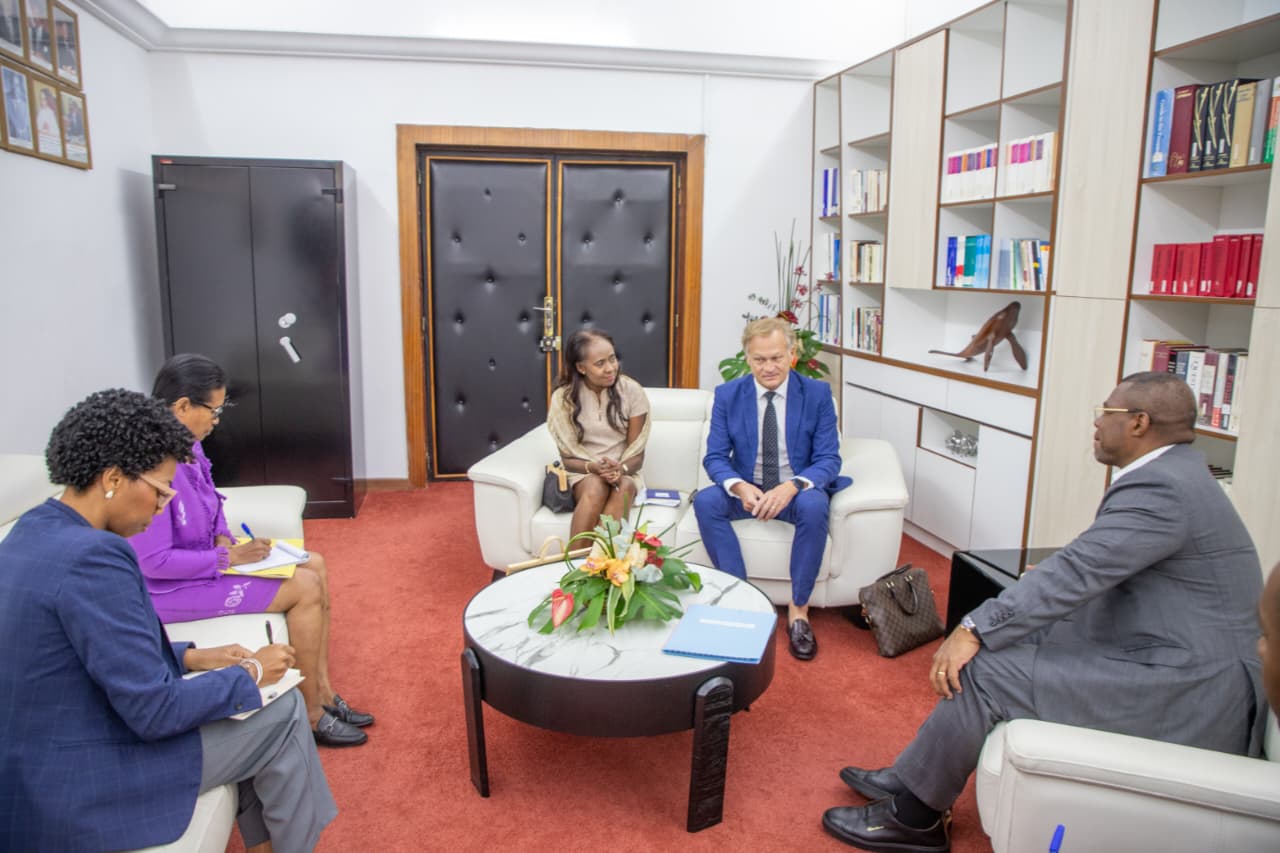
The CGHV delegation was received by the president of the National Assembly. Institutional discussions continue around the Volobe hydroelectric project. Officials from the General Company for Hydroelectricity of Volobe (CGHV) were received on Friday, July 31, by the president of the National Assembly. This meeting allowed for an update on the project's progress and discussion of next steps leading to its implementation. This meeting continues discussions between CGHV and the Malagasy State. A working meeting had been organized on July 10 to strengthen coordination among different stakeholders. Since then, technical activities and field operations continue, alongside consultations with national institutions. During the meeting held in his office, in the presence of several team members, the National Assembly president reviewed the project's main advances. CGHV representatives presented completed stages, ongoing work, and planned steps to advance implementation of this major energy infrastructure.
Institutional Support
National Assembly President Siteny Randrianasoloniaiko reaffirmed his support for the Volobe project. He emphasized the strategic importance of developing new electricity production infrastructure, as Madagascar must strengthen its energy capacity to meet growing household and economic needs. He also stressed the need to continue administrative, technical, and institutional procedures necessary for project advancement. Within Parliament's prerogatives, he expressed his availability to support upcoming stages and facilitate dialogue among all concerned parties. The National Assembly is indeed an important interlocutor for Volobe project leaders. Regular exchanges are already underway with the institution's vice-presidency responsible for Toamasina province, with members of the parliamentary energy commission, and with elected representatives from the Atsinanana region. These meetings keep national representatives informed of project developments and gather their observations. They strengthen coordination around economic, social, environmental, and territorial issues related to construction and operation of the future hydroelectric plant.
Consultation
CGHV intends to maintain this consultation approach with national and local authorities, technical services, territorial communities, elected officials, riverside communities, and all stakeholders. According to project leaders, this method is based on transparency, regular information sharing, and consideration of concerns raised throughout the development process. Beyond its energy dimension, the Volobe project is presented as a potential lever for economic and social development. Its implementation should sustainably strengthen electricity production in Madagascar, secure energy supply, and support industrial and commercial activities. Mobilization of different institutions around the project appears essential to accelerate its implementation and ensure execution within a coordinated, responsible, and sustainable framework.
Economy
Hydroelectricity: National Assembly Reaffirms Support for Volobe Project
Source: Midi Madagasikara