Economy
Budget Execution: Improving Living Standards Through Investment Acceleration
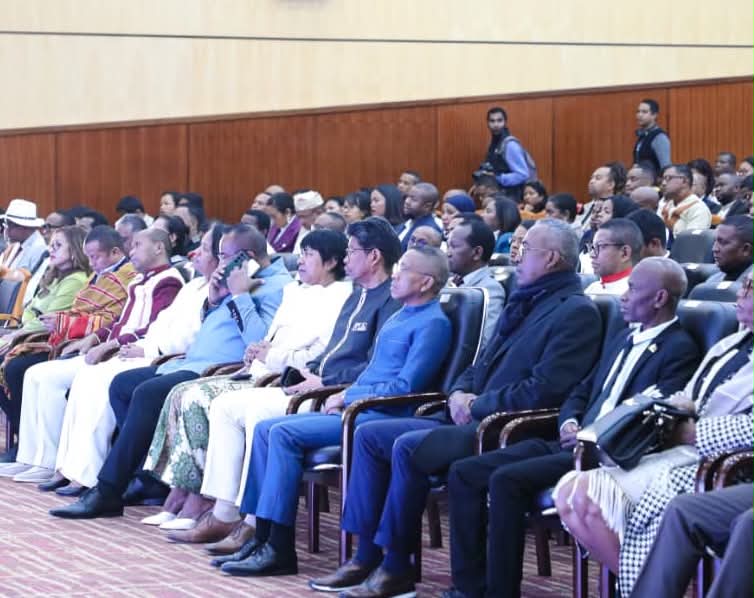
State budget execution review held at CCI Ivato after 6-year hiatus. After a six-year interruption, the semi-annual review of state budget execution resumed yesterday at the International Conference Centre in Ivato. Among persistent obstacles cited is the complexity of procedures. "We will identify and remove all blockages!" This is what Prime Minister Mamitiana Rajaonarison emphasized during the Budget Execution Review, organized yesterday under the direction of Minister of Economy and Finance Dr Ramiarison Herinjatovo Aimé, with participation from all Government members and heads of institutions and administrations. The proceedings allowed for an assessment of revenues, public expenditures, and particularly the progress of Public Investment Projects (PIP) during the first six months of the year. For the Minister of Economy and Finance, this review must enable a "real and transparent" diagnosis of the budgetary situation, while also identifying obstacles delaying priority project implementation. "A budget without investment is a budget preparing the country's decline," emphasized the head of Government. While operating expenses allow administration to continue its activities, public investments serve, according to him, to build the future through roads, schools, hospitals, electricity, and digital infrastructure. The discussions focused on three pillars defined by the Ministry of Economy and Finance: operating expenses, investments financed from internal resources, and projects supported by technical and financial partners. According to Minister Dr Ramiarison Herinjatovo Aimé, identified gaps should not serve to punish, but to engage constructive dialogue and identify blockages. Slow public procurement, disbursement delays, and certain technical shortcomings notably hindered several priority projects. Prime Minister Mamitiana Rajaonarison called for greater efficiency around three key principles: "expediency, impact, and innovation." In the first semester, investment execution rates reached 17% on external financing and 24% on internal financing, despite already visible achievements, particularly on national roads. For the second semester, the Ministry of Economy and Finance aims to make this review a genuine management tool to correct course, catch up on delays, and accelerate public investments. The objective is for budget allocations to translate concretely into roads, schools, hospitals, electricity, digital infrastructure, and improved living conditions for the population.
Source: Midi Madagasikara