Domestic
2026 Supplementary Budget Bill unanimously adopted at Tsimbazaza, budget cuts raise concerns
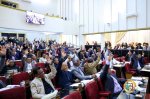
The 2026 Supplementary Budget Bill (PLFR) was adopted Monday by the National Assembly following an extended debate session lasting over seven hours. Presented by the government as a tool to address economic emergencies, support purchasing power, and strengthen productive sectors, the text nevertheless revealed several disagreements among deputies, particularly regarding the distribution of public resources among different ministries. Economy and Finance Minister Herinjatovo Aimé Ramiarison defended a budget revision centered on three priorities: improving living conditions for the population, supporting the national economy, and strengthening the State's capacity to respond to current challenges. Among key measures is the establishment of a 200,000 ariary housing allowance for state employees. The text also provides for the elimination of VAT applied to bank interest to reduce financing costs for businesses, as well as several tax adjustments concerning rice imports, meat products, anti-mosquito products, and the brewing sector. The government also affirms its desire to strengthen support for small and medium enterprises, the textile sector, local entrepreneurship, and supply chains using raw materials produced in Madagascar. Behind this presentation focused on social justice and economic development, several budget choices fueled discussions within the chamber. The case of the Ministry of Water, Sanitation and Hygiene concentrated much of the exchanges. During preparatory commission work, a reduction estimated at nearly 40 billion ariary was decided on this department's budget, primarily at the investment level. A decision that surprised several deputies. For some elected officials, it appears difficult to justify a decrease in credits devoted to drinking water when access to this resource remains a major problem in many regions of the country. Parliamentarians recalled that water supply difficulties had largely contributed to social discontent observed in recent months. Others emphasized that many districts remain insufficiently covered by water supply projects, even with the means provided in the initial budget. The argument of low budget execution advanced to explain this reduction did not achieve unanimity. Several speakers recalled that this problem does not concern only the Water Ministry but affects the entire administration. According to figures cited during debates, the average budget execution rate for the first half of 2026 would be only around 21%. The discussion also took a political turn when some deputies felt that reducing credits for such a sensitive sector risked being poorly received by the population. Questions related to water and electricity are indeed among the main concerns expressed by citizens in several regions. At the same time, the Ministry of Energy and Hydrocarbures benefited from an increase of around 40 billion ariary. According to explanations provided during debates, this additional envelope should notably allow support for fuel supply to thermal power plants to limit blackouts during the dry season. Another subject continues to fuel commentary outside the National Assembly. According to several elected officials, the budgets of the Ministry of National Education and the Ministry of Public Health would also have been revised downward as part of the arbitrations made on the PLFR. Conversely, that of the National Assembly would have experienced an increase, a decision that had already provoked reactions in recent weeks. Despite numerous requests for clarification during the session, some areas of uncertainty remained at the time of voting. Several deputies notably wished to know precisely the modifications made to different budget chapters. The text was ultimately adopted unanimously, but without the details of adjustments concerning certain ministries, particularly Water, being clearly presented in public session. While the government emphasizes a supplementary budget intended to protect purchasing power and support the national economy in an uncertain international context, parliamentary debates showed that the question of public resource distribution remains at the heart of elected officials' concerns. Between financial imperatives, social expectations, and political arbitrations, the 2026 PLFR leaves several questions still open.
Source: Madagascar Tribune