Domestic
Public Holiday Declared in Response to Wave of Kidnappings
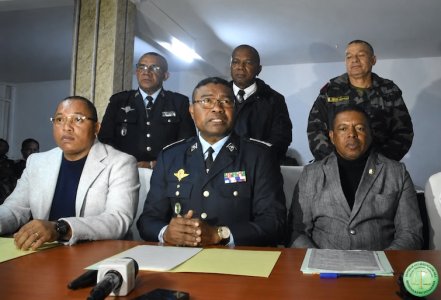
The national gendarmerie announced yesterday that 200 disappearances have been recorded to date, with 175 resolved through the safe return of those involved to their families, while 6 people have unfortunately been found dead, and 19 remain missing. The government has declared Friday, July 24 a paid public holiday as a day of national mourning. This may not necessarily be a bad thing if it could help raise awareness among authorities about the gravity of the situation, as citizens are already aware. This series of kidnappings and murders dominating headlines for several weeks has generated understandable public anxiety. The head of state rightly spoke of terrorism in a recent address. Those who have observed Malagasy political life for decades know that waves of more or less serious incidents have often preceded major political crises: assaults, kidnappings, rising crime, prison escapes, and so on. Recent events suggest that groups are working to delegitimize authorities by creating the perception that they no longer control the public security situation. The natural question then becomes: who could be orchestrating such criminal activity? In such a context, public opinion seeks quick answers to the classic question: who benefits from the crime? Lacking culprits, scapegoats will suffice. To a natural question comes the hasty reaction of those seeking answers even without concrete evidence: if this is a destabilization project against authorities, then the opposition is the first to suspect. One need only see the flood of social media comments insinuating responsibility of the Dubai fugitive. Having demonstrated since 2009 his lack of scruples and ethics when it comes to seizing or maintaining power, his responsibility is not impossible, though it remains to be proven. However, this natural response may be too easy to swallow without concrete evidence. It relies on a practice known since ancient Rome: vae victis (woe to the vanquished). One can accuse them of all manner of wrongs because they can no longer defend themselves. While we deplore the principle of accusations without proof against anyone, it is amusing to note how karma reminds Rajoelina of the same practices of denigration and defamation against Ravalomanana and his supporters after the 2009 coup. That said, if investigators truly wish to do serious work, they should also explore whether groups currently participating in the Refoundation might have interest in discrediting a future political rival. We know that in Madagascar as elsewhere, in politics there are no eternal friendships, only shared interests. When these diverge, betrayal rears its head. For example, one can imagine that clans might be interested in disrupting Colonel Randrianirina's presidential candidacy prospects, hoping their own candidate emerges as an alternative. Presidential ambitions do not lack in the corridors of current power. The head of state's rising power may thus frustrate allies who hoped he would be content with the transition period, only to find him increasingly positioning himself for a state candidacy in the next election. Finally, information circulates about a series of searches conducted as part of the investigation. In the land of honohono, tsaho and tondro-molotra, there are always willing customers for conspiracy theories. Religious fanatics and authoritarian regimes have always sought to fuel suspicion against those who act as free thinkers and critical minds. They are considered potential dangers by authoritarian regimes that prefer the obedient and the compliant, from the Catholic Church to Hitler, through Vichy, Francoist Spain, and Stalin's Soviet Union. Alleged traditions of secrecy often become the subject of the most outlandish fantasies, proportional to the level of general education in the population and the intellectual and ethical quality of the political class. Truth is rarely a priority when politics is at stake. Unfortunately, in times of crisis, truth is often secondary in Madagascar. One must therefore hope that investigators do not confuse speed with haste under pressure from public opinion.
Source: Madagascar Tribune