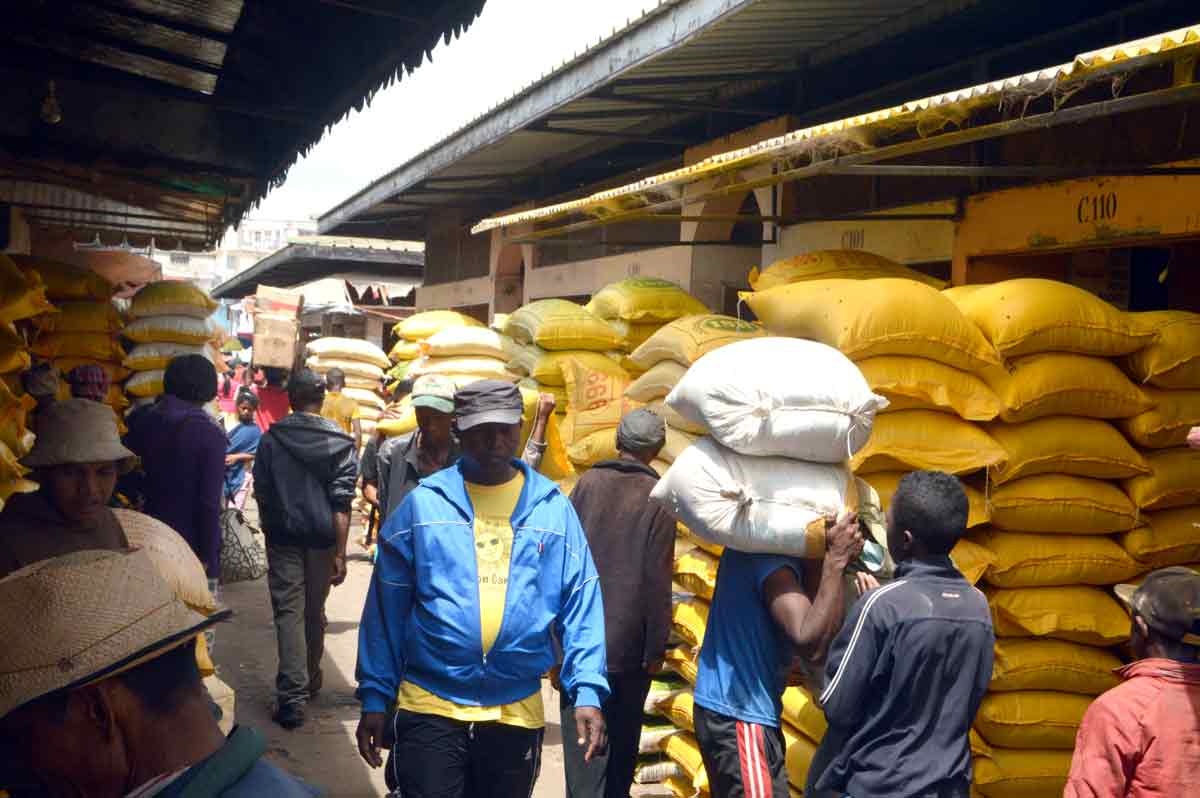
Retaxation of imported rice will strengthen the competitiveness of local rice on the national market. The retaxation of imported luxury rice is among the major economic measures provided for in the 2026 Amended Finance Law and is part of the Economic Recovery Plan under development. It aims to end market flooding by imported products. Through the application of a 20% customs duty and 5% VAT, the Government intends to restore greater space for national production, support rice farmers, and gradually reduce Madagascar's dependence on imports. This provision is part of the Economic Recovery Plan. It does not aim to abruptly halt imports, which remain necessary to supplement market supply, but to correct a concerning imbalance. Rice imports fluctuate around 800,000 tonnes per year. For the first half of 2026 alone, Madagascar had already imported over 408,667 tonnes, nearly 90% of which consisted of luxury rice. Meanwhile, many local producers struggle to sell their harvests. The massive influx of imported rice exerts strong pressure on prices and reduces outlets for Malagasy farmers, who must contend with seed costs, inputs, labor, transport, and climate risks.
For authorities, retaxation is an instrument to support the rice sector, not merely a measure to increase tax revenue. The objective is to improve the competitiveness of locally produced rice, recognized for its quality, while encouraging investments in production, storage, processing, and marketing. This measure is accompanied by other provisions to reduce farmers' costs. Herbicides and fungicides are notably exempted from tax, while fertilizers and agricultural equipment have already benefited from tax relief for several years. Public interventions also focus on rehabilitating dams and irrigation networks, distributing seeds, providing technical support to producers, and building roads to open up major agricultural basins. Several projects should enable production increases exceeding 30% in their intervention areas.
Results recorded show progress in national potential. Paddy production increased from 4,684,469 tonnes in 2025 to an estimated 5,172,000 tonnes in 2026. The Sofia region, the country's leading rice basin, alone produces over 700,000 tonnes. Beyond statistics, improved production directly transforms the living conditions of rural households. In some communes, producers, once dependent on external supplies, now begin selling their rice to other localities. For several families, increased harvests also enable better financing of children's education. Through this policy, the Government wants to send a strong signal: Malagasy rice must reclaim its full place on the national market. Supporting local production means preserving foreign currency, creating rural jobs, and strengthening the country's capacity to sustainably feed its population.
Domestic
Imported Rice Retaxation: Supporting Local Production for Food Sovereignty
Source: Midi Madagasikara