Society
Digital Sovereignty: Malagasy Innovation in Cybersecurity
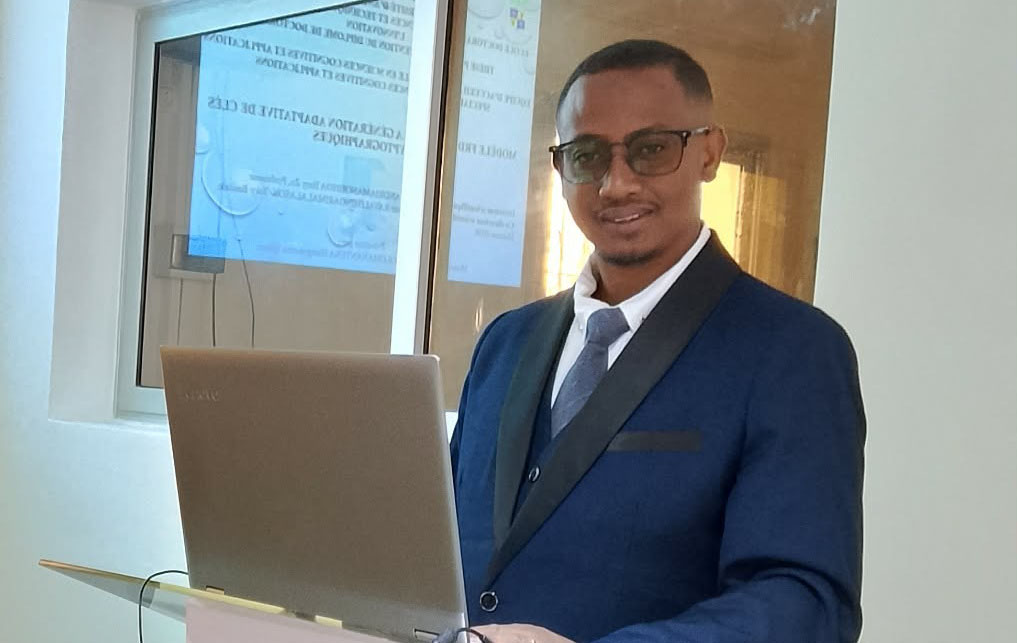
Dr Haingonirina Ignace Rajaosolomanantena, a researcher and lecturer at the École Supérieure Polytechnique d'Amoron'i Mania (ESPAM), has developed an artificial intelligence model called "FRDL" (Fourier – Riesz Deep Learning), designed to strengthen digital data security. This innovation places Malagasy research at the heart of cybersecurity and digital sovereignty challenges. In a context marked by the multiplication of cyberattacks and accelerating digital transformation, data protection has become a strategic issue for states. Critical infrastructure, telecommunications networks, public services, and defense systems now require increasingly powerful security solutions. It is with this in mind that Dr Haingonirina Ignace Rajaosolomanantena developed the FRDL model. It is based on an encryption system capable of generating intelligent and adaptive keys. Unlike conventional processes using fixed keys, this technology automatically renews encryption keys in real time. In the case of a video stream, for example, each image is protected by a new key, making any interception attempt quickly ineffective. According to the results obtained, the model meets the evaluation criteria of international standards, particularly those of the National Institute of Standards and Technology (NIST), while maintaining data transmission quality. Beyond its scientific interest, this innovation opens perspectives for Madagascar. It could contribute to strengthening the security of national digital infrastructure, while reducing the country's dependence on foreign technological solutions. It also highlights the potential of research conducted within higher education institutions in the regions, through work carried out at ESPAM. The development of this technology could also foster the emergence of a high-value digital ecosystem and strengthen Madagascar's attractiveness in the field of information technology. The researcher now wishes to expand his work by developing collaborations with other scientific institutions. "I hope that this research, born in Madagascar, can serve as a basis for collaborations with other researchers and institutions, and contribute more broadly to positioning the country in the field of artificial intelligence applied to cybersecurity," he states. This advance illustrates the capacity of Malagasy scientific research to propose innovative solutions addressing current digital transformation challenges.
Source: Midi Madagasikara