Domestic
Electricity: State and Parliament tighten grip on private producers' contracts
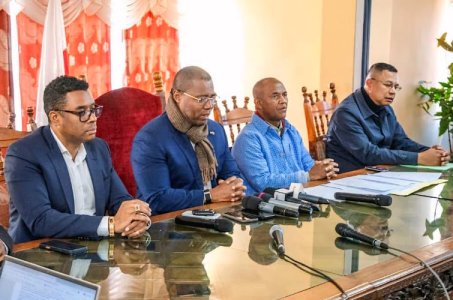
Madagascar's electricity crisis is taking on new dimensions. Within hours, the executive and Parliament have displayed a united stance of firmness in the face of persistent supply difficulties affecting several regions. While the President of the Refoundation has directly blamed one of the country's main private electricity producers, deputies have announced a sweeping inquiry into contracts between Jirama and its service providers, believing certain agreements could harm state and public interests. From Iavoloha State Palace, Colonel Michaël Randrianirina issued an unambiguous warning: the state will tolerate no further dysfunction or abuse in electricity supply. The head of state stressed that access to reliable electricity is an essential service and that repeated outages in Toamasina, Antsiranana, and Mahajanga can no longer be accepted. At the center of his criticism stands ENELEC, a historic partner of Jirama in electricity production across several major cities. The President acknowledged that this company has worked with the Malagasy state for decades, but argued that such longevity cannot justify current shortcomings. According to him, contractual commitments must be fully respected to ensure continuity of public service. The head of state also rejected explanations citing vandalism or sabotage for certain production interruptions. He stressed that only company employees have access to the facilities in question and demanded the installation of video surveillance systems to precisely determine responsibility in case of incidents. The contract binding Jirama to ENELEC was also discussed. According to the President's explanation, the company receives 65% of revenues from electricity supply under this agreement. However, he argued that in return, the company must ensure planned production levels. Otherwise, consumers bear the consequences directly. Regarding Antsiranana, the head of state illustrated his point with figures he considers revealing. According to him, ENELEC has an installed capacity of 18 MW while the city's needs are estimated at around 11 MW. Yet production reportedly fell to just 3 MW, while payments provided for in the contract continue to be made by Jirama. For the President, such a situation cannot continue. He warned that if supply was not quickly restored to Antsiranana, Toamasina, and Mahajanga, the state would take firm measures against the company. Meanwhile, the National Assembly has opened another front by officially launching work of a parliamentary inquiry commission dedicated to contracts between Jirama and private electricity producers. Composed of fifteen deputies and chaired by Pety Rakotoniaina, this commission must examine conventions signed over the years and assess their impact on the national company's finances. Parliamentarians already believe several contracts protect neither state nor Malagasy people's interests. For example, they cited agreements covering production capacity of 18.5 MW, while only 4 MW would actually be supplied—a situation that, according to them, would permanently weaken Jirama. They also question the use of the "take and pay" mechanism, which would require the state to pay for up to 80% of electricity provided by contract, whether actually consumed or not. For commission members, these clauses deserve examination to determine if they truly serve national interest. Without explicitly naming ENELEC, parliamentary commission leaders presented examples of contracts and production capacities that seem to echo the head of state's earlier criticism. This convergence of discourse reveals a shared determination by institutions to shed full light on contract execution conditions between Jirama and certain private producers. Beyond contract analysis, deputies also wish to verify whether production commitments are actually met on the ground. Conventions deemed contrary to national interest could be renegotiated or even cancelled to protect public finances and advance Jirama's recovery. The commission's work will span six months before publication of a report with recommendations. In parallel, National Assembly President Siteny Randrianasolonia
Source: Madagascar Tribune