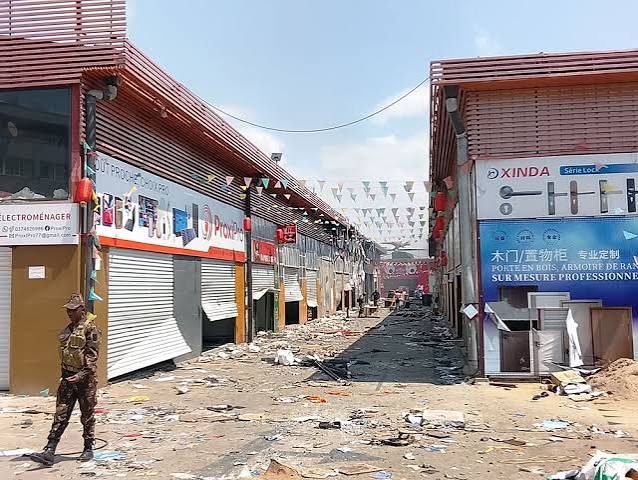
Looting during September 2025 unrest has damaged the business environment. Nine months of institutional reform have brought little change to the business climate. Worse, the military takeover, which alarmed international observers and tarnished Madagascar's image, has clearly had a negative impact on business environment ratings. Despite efforts to improve the investment climate and macroeconomic performance regularly highlighted by current authorities, Madagascar continues to be classified as a high-risk country by international agencies specializing in commercial risk assessment.
Structural Weaknesses
COFACE, for instance, maintains the Grande Île in category C, a rating reflecting a high level of risk for commercial transactions and international investments. According to the rating agency, Madagascar's business environment remains marked by several structural weaknesses. Infrastructure remains inadequate, particularly in transport, energy, and logistics. These constraints increase production costs and reduce business competitiveness. Added to this are difficulties accessing financing, slow administrative procedures, legal uncertainty felt by investors, and governance challenges. All factors that fuel risk perception among foreign economic operators.
Determining Factor
The persistent political crisis is clearly not unrelated to this negative rating, which does not reflect well on the country. Beyond economic factors, COFACE also considers the political environment a determining element in country risk assessment. International investors place particular importance on institutional stability, policy predictability, and legal security of investments. A perception of political uncertainty can thus influence investment decisions, regardless of displayed economic performance. Companies primarily seek an environment allowing them to plan activities long-term with controlled risk levels. In short, at this stage of institutional reform, Madagascar remains an unattractive country. With all the blocking factors this entails, such as companies' inability to meet financial commitments and risks that could affect economic activities. Clearly, this transition should absolutely not exceed the two years announced initially, though some reform advocates seem willing to extend it.