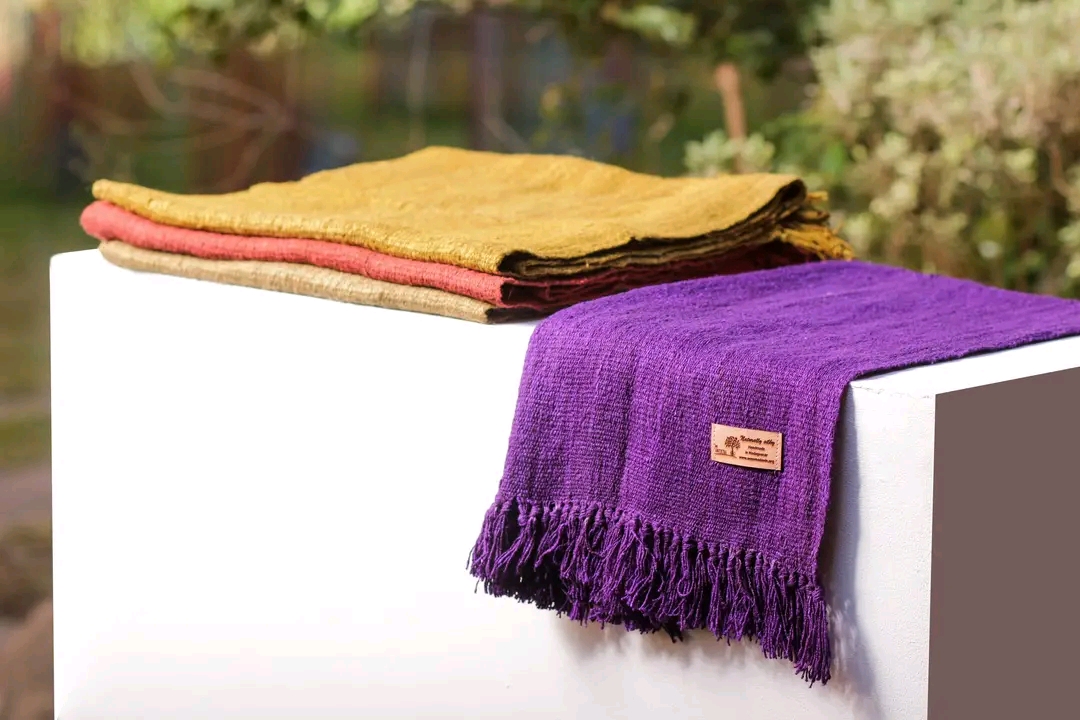
The lambas from Antoetra Bio have become emblematic pieces at the Fondation H boutique, where tradition and ecological commitment converge. This project, initiated by photographer TangalaMamy, emerged from immersion within the zafimaniry community at the heart of Antoetra. It represents a reforestation and cultural transmission initiative that has transformed the lamba into a living symbol of dignity and memory. A former forest engineer, TangalaMamy chose to anchor himself in this region inscribed on UNESCO's intangible cultural heritage list. Witnessing an evolving identity, he sought to revive a threatened tradition. The fabrics produced by Antoetra Bio are hand-woven by villagers using silk from family farms and dyed with local plant pigments. Each piece embodies a subtle alliance between nature preservation and artisanal excellence, while generating sustainable income for the community.
Through his exhibitions, TangalaMamy reminds us that zafimaniry culture extends beyond carved wood—it is living memory, a way of inhabiting the world. The lambas extend this vision: they connect the body to history, the soul to community. The project's social impact far exceeds simple textile production. Villagers, long confronted with economic fragility and cultural erosion, find in Antoetra Bio a source of stable income and recognition of their ancestral expertise. Weaving workshops become transmission spaces where elders initiate youth, reviving threatened culture and strengthening social cohesion. Additionally, a portion of project profits will fund schooling for zafimaniry orphans.
The project's impact is also measured in external perception. The lambas displayed at Fondation H position Madagascar within global artistic dialogue while affirming the universal value of local heritage. Fondation H provides a setting for these creations, dedicating boutique profits to the Hay program, which introduces children to contemporary art through creative workshops. Each scarf sold becomes an act of transmission, linking zafimaniry ancestral knowledge to the creative future of younger generations.
These workshops for children aged six to twelve transcend artistic initiation: they are designed as spaces of discovery and creative freedom, where youth experiment with various forms of contemporary expression. Hay thus becomes a bridge between tradition and modernity, connecting fabrics woven by the Zafimaniry to the creative future of Malagasy children.